Across Kenya, thousands of qualified, skilled and capable individuals remain locked out of meaningful employment not because they lack ability, but because the systems meant to include them were never designed with them in mind.
For persons with disabilities, the barriers are not abstract. They are physical, institutional and deeply embedded in society. From inaccessible buildings and transport systems to limited access to inclusive education and persistent workplace stigma, the path to employment is often obstructed long before a job application is submitted.
Recent data paints a stark picture. In Kenya, less than 1.4 per cent of public service employees are persons with disabilities, far below the legal requirement of five per cent.
Across the broader labour market, exclusion is even more pronounced. Only around 30 per cent of working-age persons with disabilities are employed, compared to 77 per cent of those without disabilities.
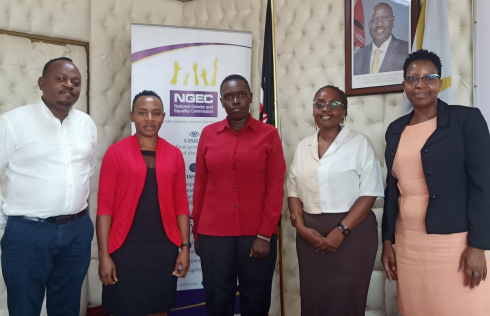
Against this backdrop, the National Gender and Equality Commission recently hosted Riziki Source to discuss strategic collaboration to address these entrenched challenges. The engagement focused squarely on the structural barriers that continue to limit access to meaningful employment for persons with disabilities.
Participants examined well-documented constraints: inaccessible workplaces and transport systems, gaps in inclusive education and skills development, limited access to assistive technologies, and weak enforcement of inclusive labour policies.
At the centre of the discussion was a shared understanding exclusion is not incidental. It is systemic.And unless those systems are deliberately restructured, inclusion will remain aspirational.
Experts increasingly describe disability and employment in Kenya as an “economic trap”. Persons with disabilities often face additional costs from assistive devices to healthcare while simultaneously encountering barriers to income generation.
A wheelchair, for instance, can cost tens of thousands of shillings, placing it out of reach for many households. At the same time, limited access to employment opportunities restricts earning capacity, reinforcing cycles of poverty and dependence.
This dynamic is compounded by education gaps. Nearly 17 per cent of children with disabilities have never attended school, significantly limiting future employment prospects. Even among those who access education, transitions into the labour market remain fraught with discrimination, inaccessible infrastructure and limited employer awareness.
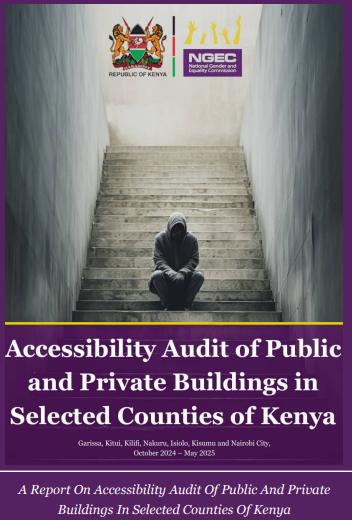
The result is a labour market that systematically excludes a significant portion of the population not due to lack of talent, but due to lack of opportunity. One of the most persistent barriers identified during the NGEC– Riziki Source engagement was the design of workplaces themselves. Many offices, factories and public spaces remain physically inaccessible. Less than 10 per cent of public buildings in Kenya are fully accessible to persons with disabilities.
Transport systems, too, remain largely exclusionary, making daily commuting difficult and, in many cases, unsafe. But the barriers are not only physical. Workplace cultures often reflect outdated assumptions about disability equating it with incapacity, or viewing accommodation as a cost rather than an investment. These perceptions influence hiring decisions, career progression and workplace inclusion, often relegating persons with disabilities to informal or low-income roles.
The engagement between NGEC and Riziki Source was not limited to diagnosis. It focused on solutions. Stakeholders identified practical, scalable interventions that could shift the landscape of employment inclusion in Kenya. These include strengthening inclusive recruitment practices, ensuring job advertisements and hiring processes are accessible, and actively encouraging employers to consider candidates with disabilities.
There was also strong emphasis on workplace accessibility from physical infrastructure to digital systems and on supporting employers to implement reasonable accommodation measures, such as assistive technologies, flexible work arrangements and adaptive workspaces.
Skills development emerged as another critical priority. Aligning training programmes with market demands, while ensuring accessibility for persons with disabilities, is essential to bridging the gap between education and employment. Equally important is shifting societal attitudes.Inclusion cannot be achieved through policy alone. It requires a cultural shift one that recognises persons with disabilities not as beneficiaries of charity, but as contributors to economic growth and innovation