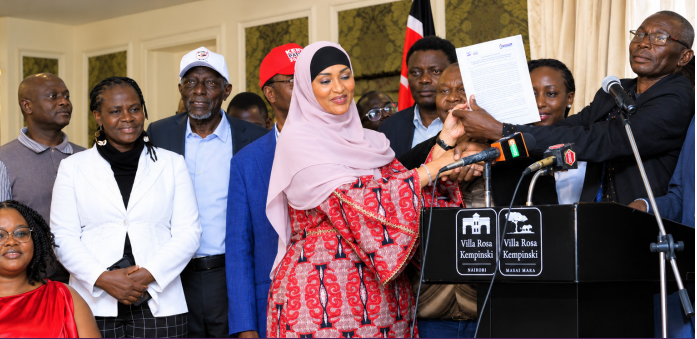
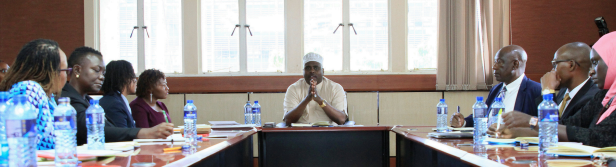
In a country whose Constitution places equality at the heart of governance, a quiet but consequential challenge continues to undermine public policy: the absence of coherent, credible and coordinated gender evidence. This reality formed the backdrop of a highlevel engagement at Harambee House Annex, where the National Gender and Equality Commission (NGEC), together with its partners, held discussions with the Principal Secretary for Cabinet Affairs, Dr Idris Salim Dokota. The meeting reaffirmed a shared commitment to advancing equality and inclusion, while confronting a problem that has long constrained Kenya’s development planning—fragmented and limited data on the lived realities of millions of citizens.
At the centre of the discussions was the recognition that policy ambition, however well articulated, cannot substitute for evidence. Without reliable data on women, youth, persons with disabilities, older persons, minorities and marginalised communities, government interventions risk missing their mark, reinforcing inequities rather than dismantling them. Kenya has made notable strides in embedding equality and non-discrimination into law and policy. Yet implementation has often lagged behind intent. One reason, acknowledged during the engagement, is the persistent gap in the generation, coordination and use of gender evidence to inform decision-making.
Existing research and data are frequently scattered across institutions, collected using differing standards and rarely synthesised into a coherent national picture.
In some sectors, information is outdated; in others, it is incomplete or insufficiently disaggregated. The result is a policy environment where decision-makers must operate with partial visibility, limiting the ability to design responsive and inclusive programmes. This challenge is particularly acute for special interest groups whose experiences are often underrepresented in national statistics. Without consistent data on access to services, economic participation, exposure to risk or outcomes of public programmes, inequalities remain difficult to measure—and therefore easier to overlook.
It was against this context that the engagement focused on strengthening the National Gender Research Agenda, a framework intended to guide the production and application of gender and equality evidence across government.
The discussions underscored the need for stronger coordination among data producers and users, including State institutions, researchers, policymakers and communicators. Improving the quality of data collection and analysis was identified as equally critical, alongside investments in institutional and technical capacity across the entire evidence ecosystem. The aim, participants noted, is not merely to generate more research, but to ensure that evidence is timely, policyrelevant and actively used in planning, budgeting and programme implementation. Strengthening the link between research and policy would allow gender and equity considerations to be integrated earlier and more systematically into national development processes.
The State Department for Cabinet Affairs occupies a strategic position within government, with a mandate to coordinate policy processes at the highest level. Its engagement in discussions on gender research signals an acknowledgement that evidence gaps are not a sectoral concern, but a cross-cutting governance issue.
By aligning institutions around shared research priorities and standards, the department is expected to play a key role in ensuring that gender and equity evidence informs Cabinet deliberations and national policy direction. Such coordination would also help reduce duplication, improve efficiency and strengthen accountability for results.
For NGEC, the engagement aligns with its constitutional mandate to promote equality and freedom from discrimination. The Commission has consistently argued that evidence is foundational to this mandate, providing the basis for credible policy advice and effective oversight of government action.