In a country where the potential of millions of children is often overshadowed by systemic barriers, the silent struggle of learners with dyslexia is finally taking Centre stage. Kenya is poised for a turning point in the fight for inclusive education, as the National Gender and Equality Commission (NGEC) joins forces with the Bloom Dyslexia Centre and the Kenya Institute of Special Education (KISE) to co-host the Dyslexia Rising Africa Conference 2025, scheduled for 20th–21st August 2025 at KISE headquarters in Nairobi.
More than just a two-day event, the conference is shaping up to be a historic reckoning with decades of exclusion, misdiagnosis, and underachievement experienced by children with dyslexia across the continent. The initiative represents a bold push by NGEC and its partners to integrate equality, non-discrimination, and dignity into the educational framework of Kenya.
Dyslexia, a neurodevelopmental condition that affects reading and language processing, is not a new phenomenon. Yet, for many Kenyan children, it remains an undiagnosed and misunderstood challenge, often mistaken for laziness or lack of intelligence. According to international estimates, 1 in 10 people have dyslexia — but in Kenya, access to diagnosis, intervention and support is painfully limited, especially in rural and marginalized communities.
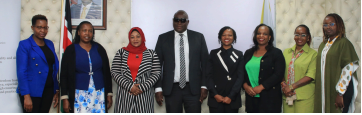
This lack of awareness often translates into punitive schooling experiences for children who simply learn differently. The trauma lingers—manifesting as low self-esteem, school dropouts, and a In a high-level planning meeting held at KISE, representatives from the Ministry of Education (Special Needs Education), Bloom Dyslexia Centre, KAIH, and NGEC laid the groundwork for what could be the most impactful conference on learning differences ever hosted in East Africa.
The conference will serve multiple functions: raising public awareness, showcasing local and international research, training educators and policymakers, and— perhaps most importantly—centering the voices of learners with dyslexia themselves cycle of poverty and exclusion.
The upcoming conference is also expected to explore policy gaps, curriculum adaptation, early detection frameworks, and teacher training needs. For NGEC, this is more than an awareness campaign—it is a call to action for government agencies and schools to invest in inclusive education.