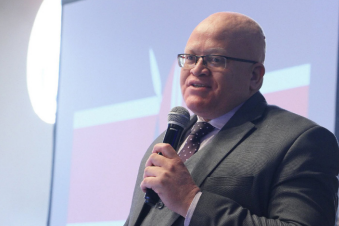
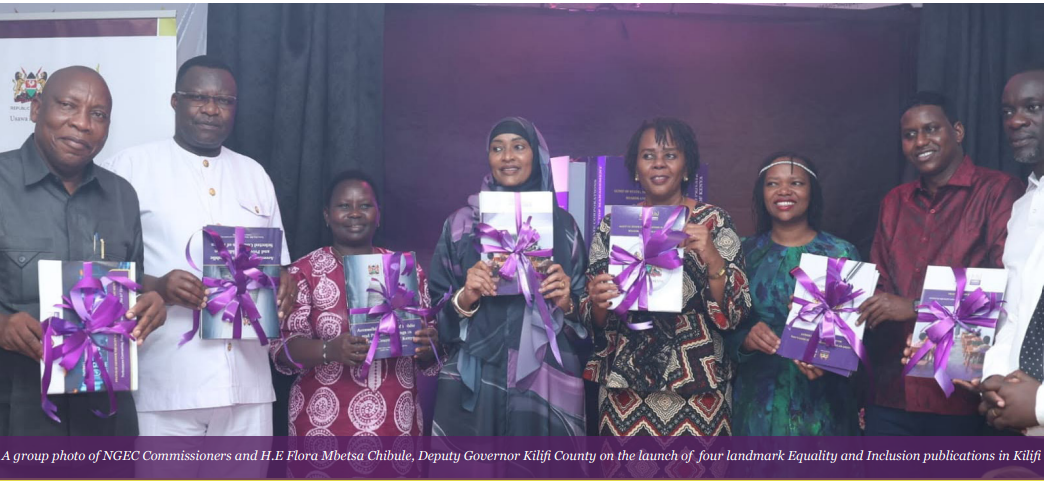
The National Gender and Equality Commission presented the USAWA Awards 2026 in Kilifi on the same day it released its findings on gender equality and inclusion in the public sector and its accessibility audit of buildings in seven counties. H.E. Gideon Mung’aro, Governor of Kilifi County, was chief guest.
The USAWA Awards 2026 recognised institutions, organisations and individuals from across the Coast and beyond. Among them was the civil society network that asked for the accessibility audit released the same day.
The awards ran in three categories. The first recognised the best performers on gender mainstreaming and inclusion in the 2024/25 Performance Contracting cycle. The second recognised state corporations meeting the not more than two-thirds gender principle and the 5 per cent disability quota in their boards and senior management. The third recognised institutions, organisations and individuals whose work has advanced inclusive service delivery in their localities.
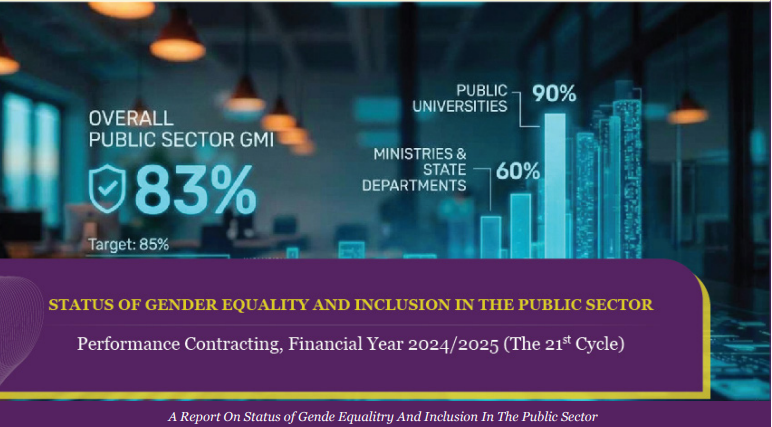
Set against the cycle’s own numbers, those scores stand out. The public sector recorded 83 per cent overall on the Gender Mainstreaming and Inclusion index, two points below target, on returns from 88 institutions, down from 201 the previous year and 390 the year before. The eleven institutions above scored 95.
The second category went to three state corporations, assessed on the composition of their boards and senior management as at June 2025.
Each received a plaque and a Certificate of Recognition for adherence to the not more than two-thirds gender principle and the 5 per cent disability quota across governance structures. Those figures carry particular weight this year. Across the 88 institutions that reported in the 21st cycle, persons with disabilities hold 1,828 of 93,506 posts, or 2 per cent of the workforce, against a statutory expectation of at least 5 per cent. No sector reached the threshold. These three institutions exceeded it several times over, at the level where appointments are made.
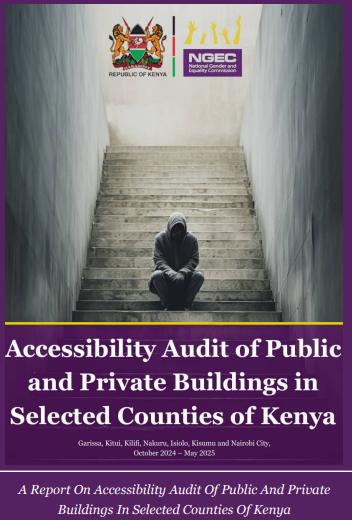
The third category drew almost entirely from the Coast and its neighbouring counties, and it is here that the day’s two strands met. Among the recipients was the Coast Civil Society Network for Human Rights, recognised for petitioning the Commission and the Senate to audit public institutions on accessibility to the built environment in Mombasa County. The accessibility audit released the same day states that it was preceded by a petition from a Mombasa-based organisation representing persons with disabilities, following which the Commission issued an advisory to the Mombasa County Government and then assessed 35 buildings in seven counties.
The awards found a revenue authority that built lactation rooms, a polytechnic that opened a day care centre, three institutions that exceeded the disability quota in their own boardrooms, a county department that moved 10,000 households to clean cooking, and a clinical officer whose paperwork holds gender based violence prosecutions together. Both sets of recommendations turn on thesame proposition.
The Commission has asked the State to establish a mechanism for routine reporting against the minimum indicators of gender mainstreaming and inclusion. It has asked that an incentive and sanction scheme support adherence to gender responsive budgeting guidelines. It has asked the National Construction Authority to make accessibility a mandatory criterion for Two special recognitions closed the ceremony. The first went to Mr Ahmed Abdisalan Ibrahim, Principal Secretary in the State Department for National Government Coordination, whose department vets and evaluates ministerial performance contract targets, for sustained advocacy of equality and inclusion across government performance. The second went to the chief guest, Governor Gideon Mung’aro, for transformative devolution outcomes on equality and inclusion in Kilifi County.
Read alongside the two reports, the list answers the objection that usually follows a critical audit, that the standard is unrealistic. The reports found a sector index two points below target on a reporting base that has fallen by more than three quarters in two years, disability employment at 2 per cent against a 5 per cent expectation, and eleven of 35 audited buildings inaccessible.