Kajiado & Machakos Counties, Kenya — In a country where gender-based violence (GBV) remains a persistent and painful blight on the lives of thousands, a beacon of hope is emerging from the heart of Kenya’s devolved government system. This hope is embodied in a groundbreaking project driven by the National Gender and Equality Commission (NGEC) and the Japan International Cooperation Agency (JICA), which seeks to strengthen county governments’ capacity to prevent and respond to GBV.
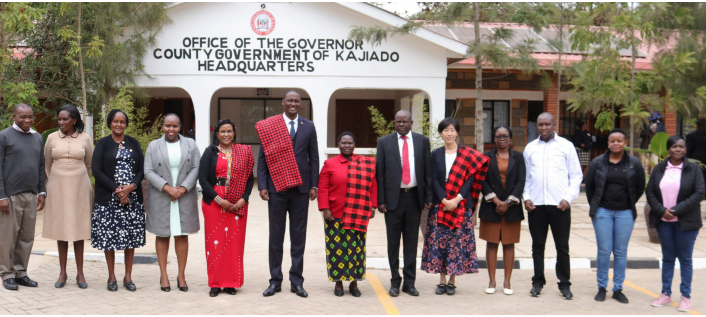
Over recent months, NGEC Commissioners Caroline Lentupuru and Dr Margaret Karungaru led a rigorous assessment mission to Kajiado and Machakos counties to review the progress of this ambitious initiative — a pilot project designed to transform how counties manage the scourge of GBV through improved service delivery, survivor-centered care, and institutional collaboration.
At the core of this mission lies a conviction shared by leaders, survivors, and advocates alike: that gender-based violence is not merely a private tragedy but a violation of constitutional rights that demands public accountability, justice, and systemic change.
The Enhancement of County Governments’ Responses to GBV project, implemented under a Technical Cooperation Agreement between the Governments of Kenya and Japan, represents a unique fusion of international expertise and local governance. It builds on Kenya’s constitutional commitments, particularly under Article 27 of the Constitution, which guarantees equality and freedom from discrimination, and the comprehensive mandate of NGEC to promote and safeguard these principles.
JICA’s technical and financial support complements NGEC’s regulatory and advocacy role, together aiming to create countylevel systems that can offer timely, compassionate, and effective support to survivors while strengthening prevention mechanisms.
The highlight of the visit was the commissioning of a state-of-threat GBV Recovery Centre at Kajiado Level 5 Hospital, a facility fully equipped to offer medical treatment, psychosocial counselling, and referral services under one roof. This Centre is more than a health facility; it is a sanctuary designed to provide survivors with dignity, safety, and hope.
Commissioner Caroline Lentupuru reflected on the significance of this centre: “This facility exemplifies what a survivor-centred approach looks like. It shows Kenya that we can offer healing with humanity and efficiency, ensuring survivors are supported holistically.” Deputy Governor Hon. Martin Moshisho Martine reiterated the county government’s full backing of the project and committed to ensuring its sustainability. “We do not see this as a temporary intervention but as an integral part of Kajiado’s health and social services. Our government will continue to allocate resources and policy support to this cause,” he said later, Commissioners Lentupuru and Karungaru travelled to Machakos County, where they were hosted by Deputy Governor H.E. Francis Mwangangi. The meeting provided an opportunity to share progress updates and discuss sustainability strategies for the GBV elimination project.
H.E. Mwangangi expressed gratitude for NGEC and JICA’s partnership and reiterated Machakos County’s dedication to the fight against GBV. “Our people deserve safe homes and communities free from violence. Machakos County stands firm in its commitment to ensure this project’s principles are embedded in our governance structures and budgets,” he affirmed.
NGEC praised Machakos County for its proactive leadership and collaborative spirit, urging other counties to learn from their example while policy and infrastructure are vital, it is the human stories behind the statistics that illuminate the project’s true impact. In both counties, survivors have shared accounts of how access to coordinated services has transformed their healing journeys.
One survivor in Kajiado, who preferred to remain anonymous, recounted her experience at the newly commissioned Recovery Centre: “Before this centre, I had to travel long distances, often feeling alone and scared. Now, everything I need — medical care, counselling, even legal advice — is here. It has given me strength to face the future.”
Such testimonials underscore the urgency of replicating this model nationwide.