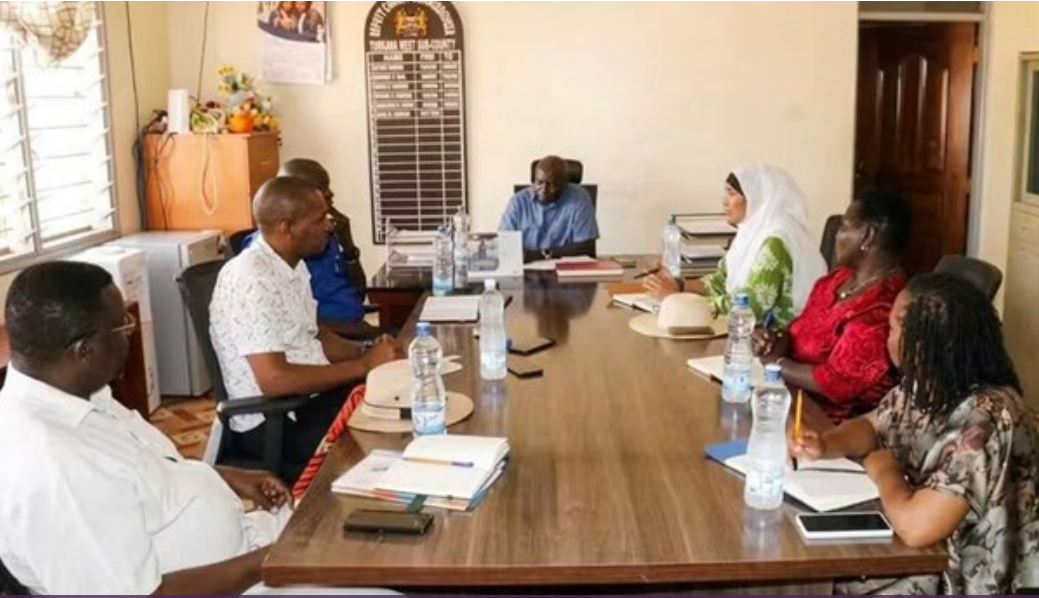
The number of children’s officers in Turkana West Sub-County has risen from one in 2019 to three, the National Gender and Equality Commission heard during an engagement in Kakuma.
The Commission, led by the Chairperson, Hon. Rehema Jaldesa, met the Deputy County Commissioner for Turkana West Sub-County, Mr John K. Oroche, on Tuesday 6 October 2026. The Children’s Officer, Mr Jared Atsiaya, said the available officers remain overwhelmed. The meeting identified the need for more officers, including more female officers, and named defilement, child marriage, barriers to education and a growing number of street-connected children as key concerns.
RESPONSE TO VIOLENCE
The Chairperson raised concerns about charges for P3 forms and the resourcing of the children’s unit at the police station. The Officer Commanding Station clarified that the police service charter does not permit charges for P3 forms, and reported a functional gender desk, GBV reporting integrated with the Ministry of Health, and capacity building for officers.
The meeting established that a Child Protection Unit exists at the station but is not adequately equipped, and that juvenile offenders are not held with adults in Kakuma. Hon. Jaldesa emphasised the need for safe spaces for children who survive sexual and gender-based violence. The meeting also acknowledged conditions at the Naduat gold mines, which the Commission had visited earlier in the day.
REFUGEES AND HOSTS
The meeting discussed a perception among local communities that refugees receive better access to services. The Deputy County Commissioner said refugee settlements, particularly Kalobeyei, had received systematic investment in water, electricity and education that had not always reached host communities at the same level. He said the Government has begun implementing the Shirika Plan, under which support to refugees and host communities is intended to be equitable.
The plan has drawn mixed reactions from local leaders. The meeting noted that shrinking humanitarian support is affecting women and children in particular, and that competition over food and other resources contributes to household tensions and violence. Under a differentiated assistance model introduced after funding cuts, roughly one third of refugees receive no food assistance.
The meeting welcomed an active GBV working group coordinating interventions in the sub-county. Mr Oroche thanked the Commission for establishing a regional office in Lodwar.
.JPG)