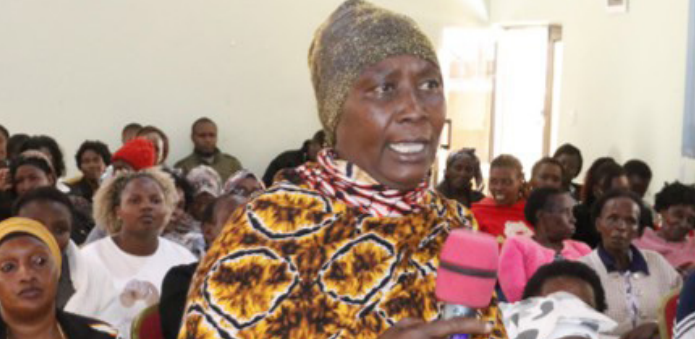
Women in Meru County demanded that political parties open leadership to women, youth, persons with disabilities and marginalised groups during a Commission dialogue on Wednesday, 16 September 2026.
The dialogue was the first of three peer sessions in the county and formed part of the county engagements of the National Gender and Equality Commission (NGEC) in Meru, Kisii and Nyamira on safe, inclusive and meaningful political participation in the 2027 electoral process.
Participants included young and older women and women with disabilities. They called for the dismantling of negative stereotypes, discriminatory norms and harmful cultural practices that limit women’s leadership.
The demand placed before political parties was that they reduce financial barriers, adopt inclusive nomination rules and support Special Interest Group aspirants to contest and win.
Drawing on her experience as a political leader from a conservative community, the Chairperson, Hon. Rehema Jaldesa, challenged women to claim their space in leadership.
POLYTECHNIC CALL
Earlier in the day the delegation, led by Commissioner Michael Nzomo, called at the Principal’s Office of Meru National Polytechnic, where it was received by Deputy Principal Lucy Ithima.
Ithima set out the institution’s role in youth empowerment through technical training programmes. The delegation later took part in a tree-planting exercise at the college.
THE COUNTY RECORD In the 2022 General Election women won two of 56 non-reserved elective positions in Meru. No woman has been elected Senator or constituency Member of Parliament in the county.
Nationally, women were 1,962 of the 16,100 candidates cleared to contest, or 12 per cent, while the success rate among cleared candidates was about 11 per cent for women and about 11 per cent for men. The Commission’s position is that the barrier operates before the ballot.
The dialogues are designed to document the experiences and perceptions of women, young people, persons with disabilities, minority and marginalised groups and older members of society on political participation and to examine how patriarchal norms, family and community expectations, political party practice, campaign financing and institutional arrangements affect the ability of Special Interest Groups to seek, attain and exercise leadership.
The session closed with a communique from the Special Interest Groups in the dialogue and with the adoption of the women’s instrument of the declaration by Special Interest Groups on inclusive electoral preparations and participation ahead of the 2027 General Election.
It records that since 2013 few women have been elected to represent the county in the National Parliament, the Senate and the County Assembly, and commits signatories to demand full inclusion in political party governance and management.
The Meru programme continued on Thursday with young people and concluded on Friday with older members of society.
.JPG)