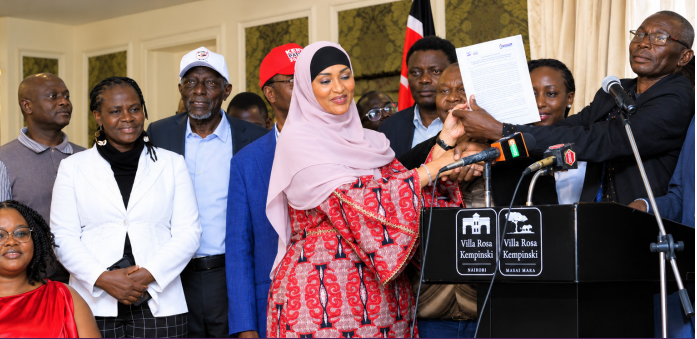
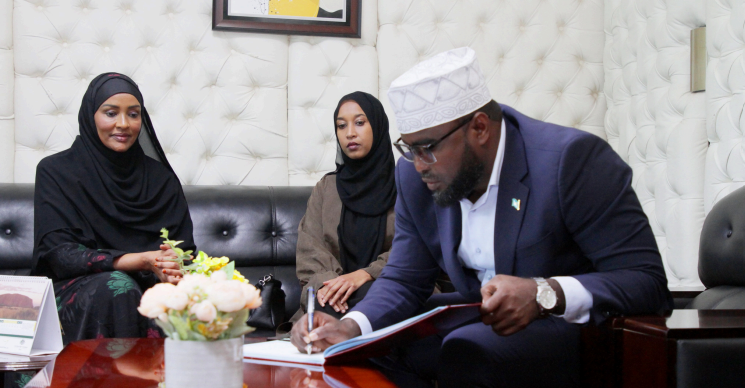
NAIROBI, Kenya — Stronger regional cooperation on inclusive governance, evidence-based planning and sustainable development took centre stage as National Gender and Equality Commission (NGEC) Chairperson Hon. Rehema Dida Jaldesa hosted H.E. Abdirahman Abdi Ahmed, Jubaland State Minister for Planning, Investment and International Cooperation, for high-level talks on strengthening institutional collaboration between Kenya and Jubaland.
The engagement reflected growing recognition that many of the region's development priorities—including gender inequality, climate-related vulnerabilities, displacement, limited access to public services and socioeconomic disparities—extend beyond national borders and require coordinated, peoplecentred responses.
Hon. Jaldesa and H.E. Abdirahman explored opportunities to strengthen cooperation in evidence-based planning, institutional capacity development, policy dialogue and knowledge exchange, to promote governance systems that are more inclusive, accountable and responsive to the needs of citizens.
The two leaders emphasized that sustainable development depends on ensuring women, youth, persons with disabilities, older persons, minorities and other marginalized groups are fully integrated into development planning, public policy and decision-making processes.
They noted that inclusive governance is essential to reducing inequalities, expanding access to opportunities and strengthening public confidence in institutions.
The discussions also focused on enhancing collaboration between institutions responsible for planning and development, recognising that reliable data, research and evidence-based policymaking are critical to designing effective public policies and delivering equitable development outcomes.
Strengthening institutional capacity through technical cooperation and the exchange of best practices emerged as a key area for future collaboration. The meeting comes as governments across the Horn of Africa continue to confront interconnected challenges driven by climate change, population displacement, food insecurity and economic pressures, all of which require greater regional coordination and long-term policy responses.
Speaking during the meeting, H.E. Abdirahman Abdi Ahmed said the longstanding relationship between Kenya and Jubaland provides a strong foundation for expanding institutional cooperation.
"Our discussions underscored the importance of strategic partnerships in addressing crossborder challenges and promoting inclusive and evidence-based development. Given the close ties and shared interests between Jubaland and Kenya, we recognised the importance of fostering meaningful collaboration and drawing lessons from Kenya's mature and advanced institutional experience."
His remarks acknowledged Kenya's experience in developing constitutional institutions and governance frameworks that promote equality, inclusion, public participation and accountability. Hon. Jaldesa reaffirmed the Commission's commitment to sharing knowledge and strengthening partnerships that advance equality and freedom from discrimination.
Climate resilience and inclusive development also featured prominently in the discussions. Hon. Jaldesa and H.E. Abdirahman recognised that communities across Kenya and Jubaland continue to face similar challenges arising from recurrent drought, environmental degradation and increasing pressure on livelihoods.
They underscored the importance of coordinated planning and inclusive development strategies that build resilience while protecting the rights and wellbeing of vulnerable populations.
The leaders further identified knowledge exchange and institutional learning as important pillars for strengthening governance across the region. By sharing practical experiences and policy innovations, they noted, public institutions can improve service delivery, enhance accountability and respond more effectively to emerging development challenges.
Hon. Jaldesa and H.E. Abdirahman reaffirmed that responsive institutions, informed by evidence and guided by inclusive governance principles, are fundamental to achieving sustainable development.
As Kenya continues to strengthen regional partnerships within the Horn of Africa, the engagement highlighted the growing importance of cross-border cooperation in addressing shared challenges, promoting inclusive development and building resilient institutions capable of delivering equitable opportunities for all.