Strengthening collaboration between public institutions remains central to Kenya's efforts to advance the rights, inclusion and equal participation of persons with disabilities.
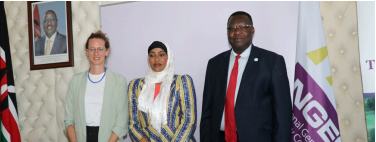
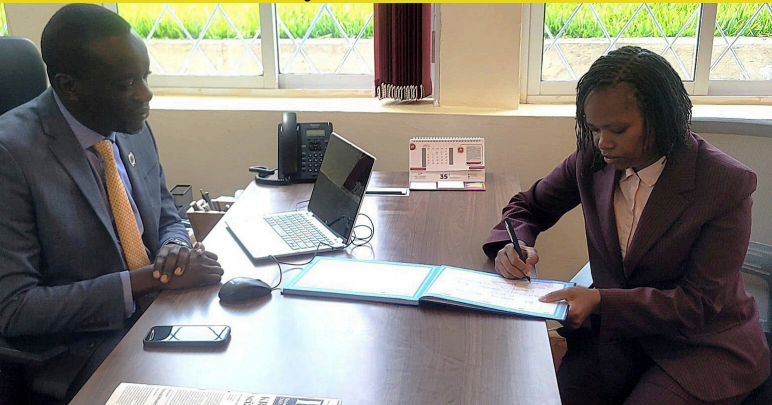
Against this backdrop, the Chief Executive Officer of the National Gender and Equality Commission (NGEC), Dr Purity Ngina, paid a courtesy visit to Dr Michael Munene, Chief Executive Officer of the National Council for Persons with Disabilities (NCPWD), to deepen institutional cooperation on disability inclusion and accessible public service delivery.
The high-level engagement provided an opportunity for the two institutions to review shared priorities, align strategic interventions and identify practical areas for partnership aimed at eliminating barriers that continue to limit the full participation of persons with disabilities in social, economic and public life.
The discussions focused on strengthening collaboration in promoting accessibility, advancing equality and supporting the meaningful participation of persons with disabilities across governance, education, employment, justice and public service delivery.
The two leaders also explored opportunities to reinforce disability mainstreaming within public institutions, recognising that inclusive policies must be matched by effective implementation and coordinated institutional action.
The engagement comes at a time when Kenya continues to strengthen its disability inclusion agenda through legislative, policy and institutional reforms. The National Council for Persons with Disabilities, established to promote and safeguard the rights of persons with disabilities, plays a central role in coordinating disability mainstreaming, promoting accessibility and supporting the implementation of disabilityrelated laws and policies across government.
Under the leadership of Dr Michael Munene, whose expertise is grounded in universal design and inclusive public policy, the Council continues to champion accessible and inclusive development. The leaders acknowledged that while Kenya has made significant progress in advancing disability rights, many persons with disabilities continue to encounter barriers in accessing education, healthcare, employment, transport, justice and other essential public services. Addressing these challenges requires stronger institutional collaboration, evidencebased policymaking and sustained engagement with organisations of persons with disabilities and other stakeholders. The discussions also underscored the importance of ensuring that disability inclusion is integrated across national and county development planning. Accessible infrastructure, inclusive digital services, reasonable accommodation, equal employment opportunities and meaningful public participation remain critical components of an inclusive society where every person can contribute and benefit equally. For NGEC, promoting disability inclusion forms part of its constitutional mandate to champion equality and freedom from discrimination for all Special Interest Groups. Through policy advocacy, monitoring, public education and strategic partnerships, the Commission continues to support initiatives that advance equal opportunities and strengthen accountability in the implementation of disability rights.
The engagement reaffirmed a shared commitment to building stronger institutional partnerships that translate constitutional guarantees into practical outcomes for persons with disabilities.
By aligning expertise, coordinating interventions and strengthening collaboration, NGEC and the National Council for Persons with Disabilities aim to accelerate progress towards a Kenya where accessibility, inclusion and equal opportunity are embedded across every sector of society. As the country continues to implement its disability inclusion agenda, partnerships between key public institutions will remain essential to removing systemic barriers, improving service delivery, and ensuring that persons with disabilities participate fully in national development.
Strengthening coordinated action today lays the foundation for a more inclusive, equitable and accessible Kenya where no one is left behind.