The National Gender and Equality Commission (NGEC) has presented Kenya’s record on gender-based violence (GBV), femicide and the rights of marginalised persons to the African Commission on Human and Peoples’ Rights (ACHPR).
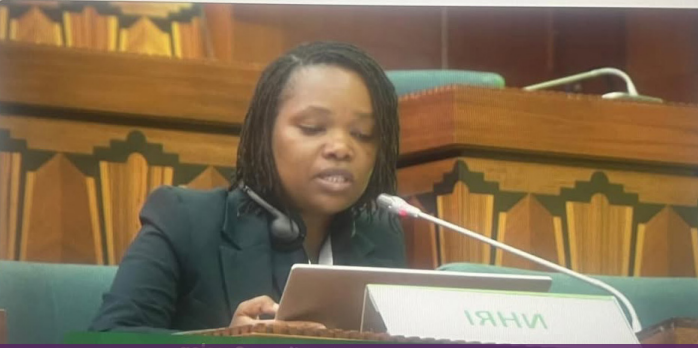
Delivering the Commission’s statement at the 89th Ordinary Session, held from 12 to 21 October 2026, Commission Secretary and Chief Executive Officer Dr Purity Ngina, MBS, anchored Kenya’s commitments in the African Union’s Solemn Declaration on Gender Equality in Africa, adopted in July 2004. The declaration, she said, “remains a vital commitment to the dignity, safety and equal participation of women and girls.”
“The Commission’s broad mandate enables us to address overlapping barriers to protection, participation and redress,” she told the session.
FROM TASKFORCE TO COUNTIES
The Commission sat on the Presidential Technical Working Group on Gender-Based Violence, including Femicide, and submitted institutional memoranda on GBV trends, contributing factors, legal and policy gaps, enforcement, financing and institutional readiness. Its contributions informed the national report, which called for stronger prevention, survivor-centred responses, accountability and coordinated action.
After Cabinet endorsed the report, the Commission reaffirmed its oversight role in implementation. With the State Department for Gender Affairs and Affirmative Action, it convened training to translate the recommendations into county action, covering prevention, accessible reporting, referral pathways, survivor support, safe shelter and legal accountability.
Dr Ngina told the session that adequate financing, clear institutional responsibilities and continuous monitoring are essential if national commitments are to produce measurable improvements in protection, particularly for women and girls facing multiple forms of discrimination and exclusion.
She cited the Commission’s investigations and advisory in 2025 following the murder of a teenage refugee girl in Dadaab, which urged Government and humanitarian agencies to strengthen prevention and response in humanitarian settings. In 2026, the Commission’s advocacy on the sexual abuse of boys called on schools, communities and authorities to protect all children and ensure their access to justice.
RESULTS IN THE COUNTIES
Through its partnership with the Japan International Cooperation Agency (JICA), the Commission has strengthened GBV prevention and response in Kajiado, Machakos and Nairobi. In Machakos, training equipped teachers, school administrators and teacher training college lecturers to address school-related GBV and child protection. Anti-SGBV committees, consultation rooms and a school prevention and response policy have strengthened reporting and case management, and a pilot karate programme engaged 50 students and eight teachers in GBV awareness and self-defense.
The partnership has linked survivors’ safety with economic resilience. In Kajiado, 150 survivors received solar lanterns for safer movement at night. In Nairobi, the Innovate Against GBV business contest connected more than 30 survivors to entrepreneurship training and incubation support, and the LIFT board game helped women and girls explore practical choices on empowerment.
On access to justice, the partnership supported learning at the Shanzu Gender Justice Court on specialised services and coordinated survivor support. The Commission also took part in seven Court Users Committees, contributing to child-sensitive justice and the prioritisation of cases involving children and GBV. Forums with traditional and faith leaders, male champions and youth on masculinity, power and harmful norms encouraged men to join anti-GBV campaigns, support reporting and mentor younger men.
Kenya’s experience has also reached other countries. Through JICA’s Knowledge Co-Creation Programme in Tokyo, the Commission shared county-level interventions and lessons with participants from 14 countries.
MINORITIES AND WIDOWS
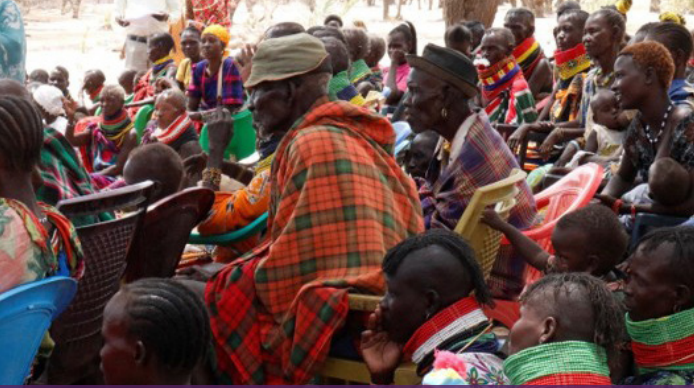
The statement drew attention to communities where gender discrimination intersects with ethnicity, geography, disability, poverty and displacement. The Commission’s research on minority and marginalised communities, including girls’ access to education, has supported more informed planning. As a member of the National Technical Working Committee, the Commission facilitated the development of a national policy framework for marginalised communities and continues to advocate its adoption and implementation. Through the Africa Indigenous Peoples’ Dialogue, it has pressed for inclusive financing, culturally appropriate services and accountability.
On widows, the Commission and its partners convened a high-level forum on disinheritance, harmful practices and economic vulnerability, producing recommendations on succession, matrimonial property and legal protection. The Commission has also contributed to the technical committee developing the Widows Bill.
Dr Ngina said sustaining these gains requires investment in prevention, accessible survivor services, safe shelters, effective investigations and timely justice, alongside stronger protection against online abuse and exclusion. She reaffirmed the Commission’s commitment to work with governments, communities, civil society and regional and international partners to advance “an Africa where every woman and girl lives safely, participates equally and exercises her rights with dignity.”
The Commission’s broad mandate enables us to address overlapping barriers to protection, participation and redress.” Dr Purity Ngina, MBS, Commission Secretary and Chief Executive Officer, NGEC