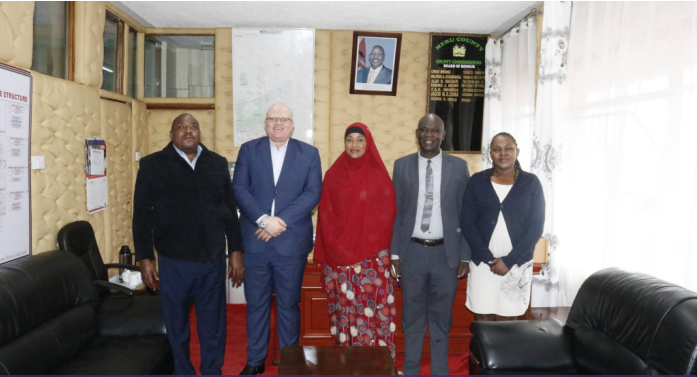
The National Gender and Equality Commission (NGEC) opened grassroots dialogues in Meru, Kisii and Nyamira counties on Tuesday on the barriers to political participation ahead of the 2027 General Election.
The programme ran from 14 to 18 September 2026 and was conducted concurrently in the three counties, each with its own delegation. Meru was led by the Chairperson, Hon. Rehema Jaldesa, with Commissioner Michael Nzomo. Kisii was led by the Vice Chairperson, Thomas Koyier, with Commissioner Margaret Karungaru. Nyamira was led by Commissioner Caroline Lentupuru with the Commission Secretary and Chief Executive Officer, Dr Purity Ngina
The forums examined the cultural, economic, political and institutional barriers that keep women out of competitive elective office, including gender-based violence and violence against women in politics, and sought agreement on county actions ahead of the election.
BEFORE THE BALLOT
In the 2022 General Election women won two of 56 non-reserved elective positions in Meru, one of 56 in Kisii and none of the 26 in Nyamira. No woman was elected Senator or constituency Member of Parliament in any of the three counties.
Nationally, women were 1,962 of the 16,100 candidates cleared to contest, or 12 per cent, while the success rate among cleared candidates was about 11 per cent for women and about 11 per cent for men. The Commission’s position is that the barrier operates before the ballot.
THE CALENDAR
The Independent Electoral and Boundaries Commission published the electoral timetable for the 2027 General Election on 19 August 2026 in Gazette Notices 13497 to 13503, Kenya Gazette Vol. CXXVIII, No. 144 (Special Issue). Nomination rules certified in October and lodged in November 2026 govern how parties conduct primaries and how they compile the party lists from which twelve special interest seats in the National Assembly and four in the Senate are filled. The Commission holds that a party that lodges rules making no provision for the nomination of youth, persons with disabilities or minorities has, in practical terms, settled that question for the entire electoral cycle.
WHAT WAS DEMANDED
The declaration requires political parties to support the campaigns of Special Interest Group aspirants with financing, to reduce the fees required for nominations, and to accord those aspirants nomination certificates in election areas where they can easily win.
The instruments for persons with disabilities and for minority and marginalized communities record that those groups are entitled to reserved seats in Parliament and County Assemblies, and ask political parties to nominate them deliberately for the seats available. The instruments record the electoral timetable issued by the Independent Electoral and Boundaries Commission as binding on everyone in the conduct of the 2027 General Election.
Each instrument carries a note that theCommission is an independent constitutional commission, that the declaration is
for public education and accountability,
and that the Commission does not support, endorse or oppose any political party, candidate or aspirant.
The Commission will convene a review of the commitments before 6 November 2026 and will report publicly on what was committed.
.JPG)