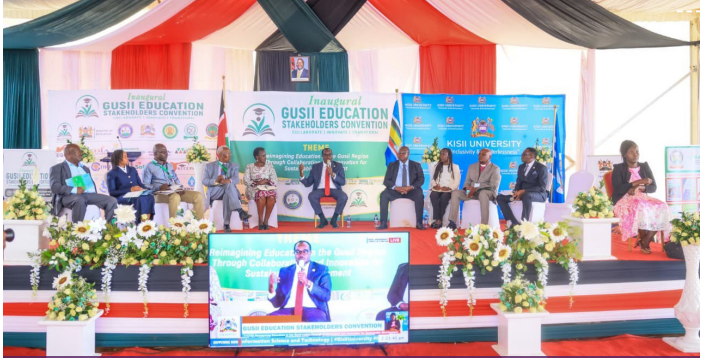
The National Gender and Equality Commission (NGEC) has told the Gusii Education Stakeholders Convention that equal enrolment of girls and boys is the starting point of gender equality in education.
The Commission Secretary and Chief Executive Officer, Purity Ngina, PhD, MBS, set out the position as a panellist in a high level discussion on the future of education. The convention was attended by the Cabinet Secretary for Education, Hon. Julius Migos Ogamba.
The convention was the inaugural edition and ran under the theme Reimagining Education in the Gusii Region Through Collaboration and Innovation for Sustainable Development.
Ngina told stakeholders that gender parity in education and gender equality are not the same. Equal numbers of girls and boys in school represent important progress, she said, and that progress marks the beginning of the work.
BEYOND ENROLMENT
The next focus, she said, must be ensuring that every child is in class, learning, thriving and reaching their full potential. That requires education systems which respond to the different needs and experiences of girls and boys.
Ngina set out four areas for action. Stakeholders should strengthen gender-responsive pedagogy and create inclusive learning environments. They should address the barriers that keep children out of school. And they should ensure that every learner has an equal opportunity to succeed.
“Getting children into school is access. Keeping them learning is inclusion. Ensuring they thrive is equality,” Ngina told the convention.
SYSTEMS AND OUTCOMES
The sequence sets enrolment as the first test of a school system, and learning, retention and attainment as the tests that follow it.
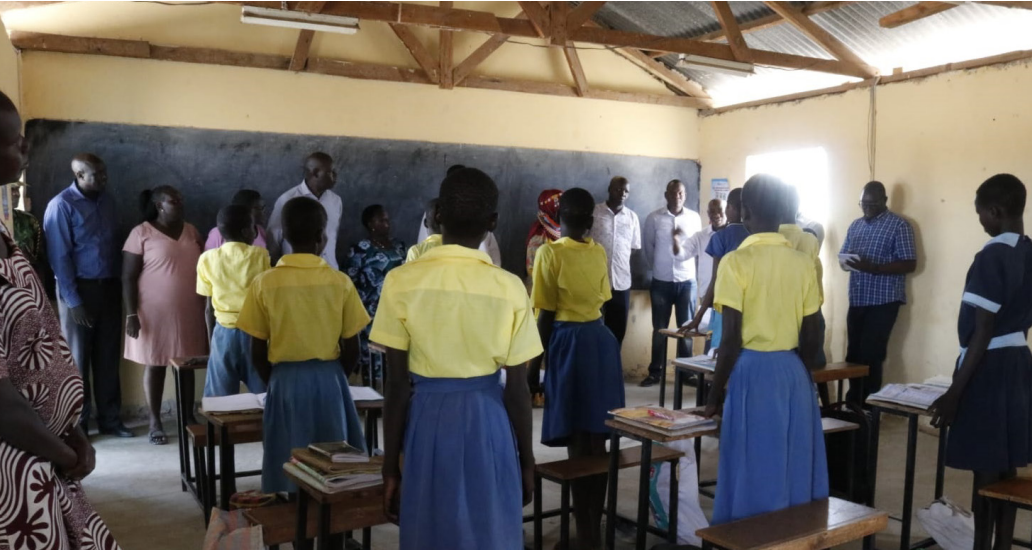
Ngina located the Commission’s interest in the classroom itself, in the pedagogy applied there, in the learning environment around it, and in the reasons children remain outside it.
The panel brought together Ngina, Ogamba and Dr Sara Ruto, Chairperson of Kisii University, on the future of education. The Commission’s participation placed gender equality on the sector’s own forward agenda.
The measures Ngina put to the convention are directed at the education system: gender-responsive pedagogy, inclusive learning environments, and the removal of barriers that keep children out of class.
The Commission set a single test for each of them, that every learner, girl or boy, has an equal opportunity to succeed and to reach their full potential.
.JPG)