As the 2025 Devolution Conference concluded in Homa Bay, a message delivered on Day One continues to echo with urgency and clarity: county and national governments must stop delaying payments owed to youth, women, and persons with disabilities under the Access to Government Procurement Opportunities (AGPO) programme.
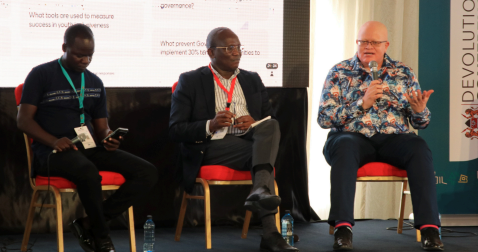
This strong call came through from Commissioner Mbithuka Nzomo, during a session hosted by Shining Hope for Communities (SHOFCO). Frustrated by persistent bottlenecks facing youth-led enterprises, he spoke plainly about the human cost of delayed payments and hollow implementation.
“Young people are delivering on AGPO contracts but are being left in debt and despair because payments don’t come through. This is no longer a matter of administration. It’s an accountability issue,” said Commissioner Mbithuka.
He drew directly from the Commission’s engagement with youth across Kenya, citing examples of stalled businesses and shrinking trust in public procurement systems. While AGPO was designed to unlock opportunities for special interest groups, he said, failure to pay suppliers on time is undercutting its very purpose. “Digitization can be a game changer, but only if it comes with real support systems,” he added. “We need to pair digital procurement systems with ICT mentorship and financial safeguards that protect small businesses run by youth, women and persons with disabilities.”
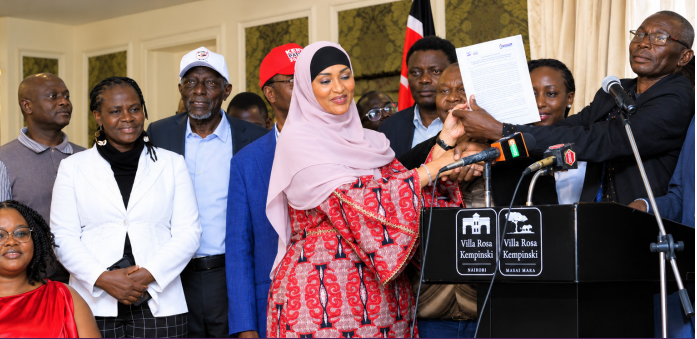
The session took place on Good Governance Day, officially opened by President William Ruto, and focused on advancing transparency, participation and inclusive development in counties. NGEC’s presence was strong and visible throughout the day, led by Chairperson Hon. Rehema Jaldesa. Commissioners Thomas Koyier and Caroline Lentupuru were also present during the SHOFCO session, underscoring the Commission’s collective focus on accountability in procurement.
The Commission has consistently advocated for the full and substantive implementation of AGPO, not as a token programme, but as a legally grounded instrument for economic inclusion. That means not only awarding contracts fairly but ensuring payments are timely, predictable and protected from political or bureaucratic interference.
The call aligns with NGEC’s broader oversight role, which includes monitoring how counties comply with constitutional obligations on equality, inclusion and fair treatment of special interest groups. At the conference, the Commission made clear that it would continue pressing for deeper reforms,including dedicated budget lines for SIG programmes, enforcement mechanisms for AGPO obligations, and public tracking tools to measure compliance.
“Counties cannot say they are empowering youth or women while failing to honour basic commitments like payment for services already delivered,” Commissioner Mbithuka said. “It’s time to stop managing inequality and start correcting it.”
As counties return to business after the conference, the Commission’s message stands as a clear benchmark: inclusion must be real, not rhetorical—and that starts with paying what is owed.