The National Gender and Equality Commission (NGEC) joins the Deaf community in Kenya and across the world in commemorating the International Day of Sign Languages, observed annually on 23 September to raise awareness of the importance of sign languages in the full realization of human rights of Deaf people.
The 2026 theme, “Declaring Deaf People’s Human Rights,” reminds us that Deaf people are rights-holders, some serve as duty bearers, and equal members of society. The theme affirms that sign language is central to dignity, identity, equality and meaningful participation. Kenyan Sign Language is a complete natural language for Deaf people to learn, express, access information, preserve their dignity and participate in life.
The World Federation of the Deaf estimates that there are more than 70 million Deaf people, and more than 80 per cent live in developing countries. Collectively, Deaf people use more than 300 sign languages. The Convention on the Rights of Persons with Disabilities recognizes sign languages as equal in status to spoken languages and calls for the promotion of the linguistic identity of the Deaf community. According to the 2019 Kenya Population and Housing Census, 153,361 persons aged 5 and above had hearing disability. Recently, the 2022 Kenya Demographic and Health Survey (KDHS) found that among persons aged 5 and above, 4 per cent experienced some degree of hearing loss.
Article 7(3)(b) of the Kenya Constitution obligates the State to promote the development and use of Kenyan Sign Language, while Article 54(1)(d) guarantees every person with a disability the right to use Kenyan Sign Language, Braille or other appropriate means of communication. Article 120 recognizes Kenyan Sign Language as one of the official languages of Parliament. The provisions read together with Article 27 (equality and freedom from discrimination), Article 35 (access to information), Article 38 (political rights) and Article 43 (economic and social rights) affirm the right of Deaf people to participate fully and equally in Kenya’s so cial, economic and political life.
The enactment of the Persons with Disabilities Act, 2025 marked an important milestone in translating these constitutional guarantees into enforceable obligations. Significantly, the Act requires public and private insti tutions to accept and facilitate the use of Kenyan Sign Language and other accessible means of communication. It strengthens the right of Deaf learners to inclusive and quality education, including access to qualified teachers, interpreters, appropriate learning materials and support services, and provides for the introduction and strengthening of Kenyan Sign Language courses in learning and training institutions.
The County Governments Act, 2012 recognizes Kenyan Sign Language as an official language of county assemblies, supporting the participation of Deaf people in devolved governance. These legal measures are es sential to ensuring equal access to information, education, justice and public services.
The Commission acknowledges the progress Kenya has made in promoting the rights of the Deaf community. However, rights declared in law must be matched by deliberate, adequately resourced and measurable implementation. Many Deaf people continue to encounter communication barriers in hospitals, schools, courts, police stations, workplaces and other public and private spaces. A right that cannot be exercised because an interpreter is unavailable, information is inaccessible or a service provider cannot communicate in Kenyan Sign Language remains an unfulfilled right.
In fulfilment of its constitutional and statutory mandate, NGEC continues to promote gender equality and freedom from discrimination for persons with disabilities, including Deaf people. Through assessments of
school readiness for learners with disabilities, audits of the built environment and public transport systems, engagement in the implementation of the Persons with Disabilities Act, 2025, and participation in disability-sector coordination mechanisms, the Commission continues to advocate for a comprehensive understanding of accessibility beyond the physical environment.
On this International Day of Sign Languages, the National Gender and Equality Commission calls upon national and county governments, Parliament, the Judiciary, learning institutions, healthcare providers, employers, media houses, private sector actors and other duty bearers to accelerate the implementation of exist ing constitutional and legislative commitments specific to Deaf people.
The Commission particularly calls for:
a) Greater availability of qualified Kenyan Sign Language interpreters across healthcare facilities, courts, public institutions and other essential services;
b) Increased accessibility of public information and communication, including emergency and public-interest information, through Kenyan Sign Language and other appropriate formats;
c) Strengthened access to inclusive and quality education that responds to the linguistic and communication needs of Deaf learners;
d) Increased access to healthcare, justice, employment, economic opportunities and social protection for Deaf and hard-of-hearing persons;
e) Increased investment in the training, professional development, accreditation and deployment of Kenyan Sign Language interpreters;
f) Improved collection of data on Deaf persons, hard-of-hearing persons and Kenyan Sign Language users to support evidence-based planning and budgeting;
g) Greater recognition, promotion and protection of Deaf linguistic identity; and
h) Greater and meaningful participation of Deaf persons and their representative organizations in the formulation, implementation and review of laws, policies, programmes and decisions that affect their lives.
The National Gender and Equality Commission is committed to working with all actors, including organizations of persons with disabilities, and the Deaf community, to transform constitutional and legislative guarantees into lived equality for every Deaf person in Kenya.
Happy International Day of Sign Languages.
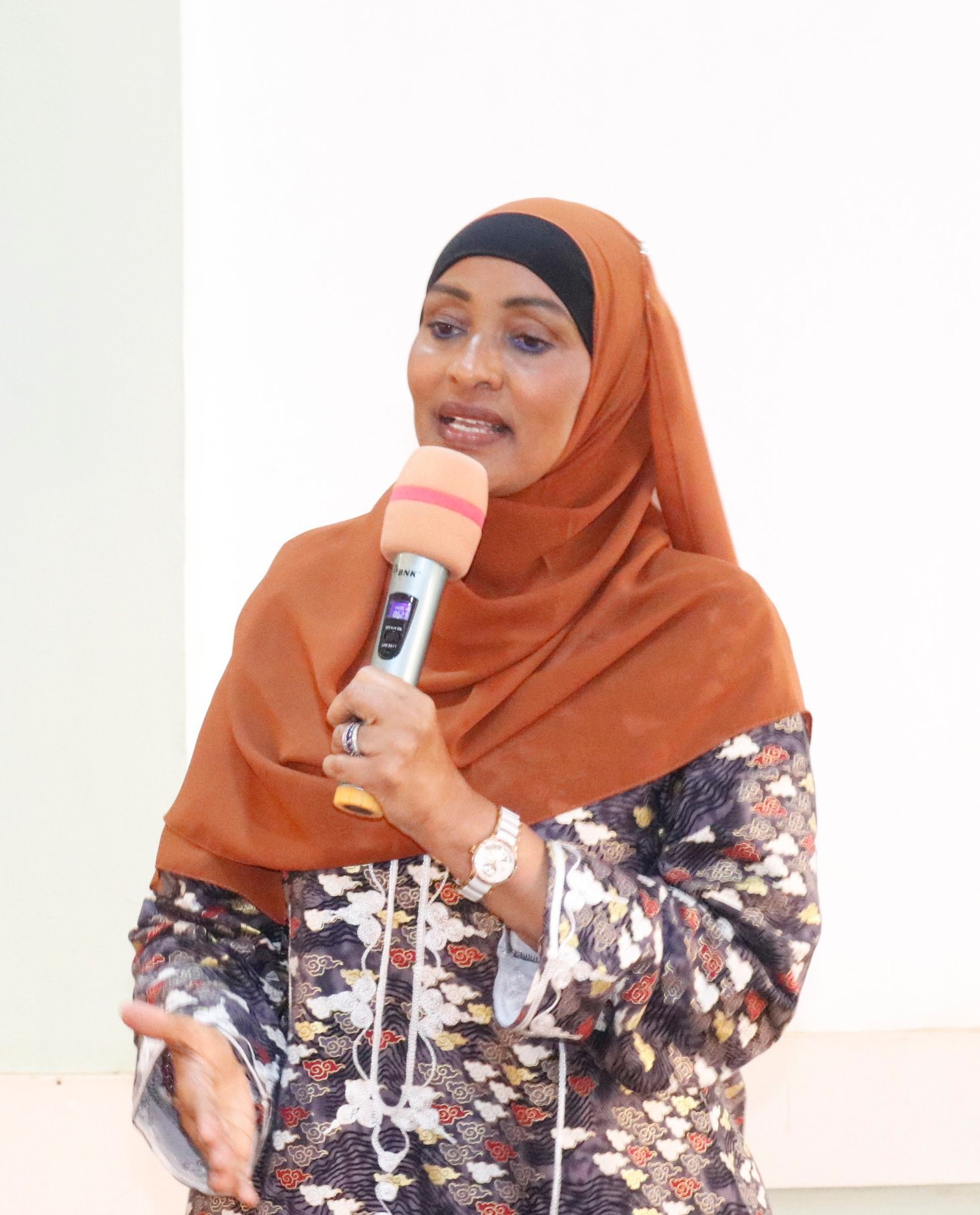
Hon. Rehema Jaldesa
CHAIRPERSON
.JPG)