The National Gender and Equality Commission mission to Turkana County this month has brought the Ilimanyang, one of Kenya’s smallest and most vulnerable minority communities, into the national policy conversation.
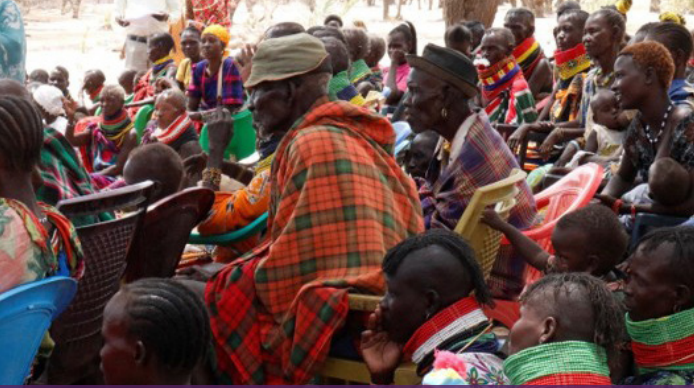
The Commission’s delegation, led by Chairperson Hon. Rehema Jaldesa, met the community and its representatives in Kapua village on 7 October 2026. The following day, the community’s case was before a Cabinet Secretary, the Speaker of the Turkana County Assembly and senior national and county officials.
The engagement formed part of the Commission’s mission to Turkana County from 3 to 10 October 2026. The mission assessed the lived experiences of minority and marginalised communities, refugees and host communities, and communities affected by oil and petroleum operations. The encounter with the Ilimanyang came to define it.
Most of the community lives in Kapua, on the remote shores of Lake Turkana, with some members in the neighbouring villages of Kapora, Kokal and Kalokol in Turkana Central. Families depend almost entirely on small-scale fishing, a livelihood under pressure from diminishing lake resources, recurrent drought and a lack of modern fishing gear.
A DECLARATION IN KAPUA
By a show of hands, community members told the delegation that they lack identity cards, medicine and access to schooling. They then made a declaration: they wish to be recognised as persons with disability, in addition to their status as a minority and marginalised community.
The delegation observed an unusually high prevalence of severe physical disabilities and developmental conditions among community members. The pattern of cases points to a possible hereditary or genetic component that requires specialised medical investigation.
The community has for years drawn attention over recurring reports of a rare condition believed to run in affected family lineages. Community advocates and medical commentators have linked it to Hypohidrotic Ectodermal Dysplasia, a recognised genetic disorder that medical literature associates with absent or reduced sweat glands, sparse hair and missing or malformed teeth. Affected persons report pouring water over their bodies through the day to stay cool in the intense heat of the lakeshore.
No conclusive medical determination has yet been made. The specific condition, its mode of inheritance, its prevalence and its severity remain unconfirmed. Without that evidence, affected persons have remained outside formal disability registration, specialised care programmes and social protection initiatives
. “They have not known until yesterday that they are persons with disability,” Chairperson Jaldesa told Government officials the day after the Kapua meeting. She noted that the Ilimanyang are often confused with the El Molo of Marsabit County, a community she knows through her own ties to Marsabit, and said the two communities are unrelated.
Support to date has taken two forms. In 2023, the Turkana County Government classified the Ilimanyang as a special affirmative action group for prioritised relief food during severe droughts, and humanitarian organisations have supplied protective skin ointments. Both interventions have eased immediate hardship. The community’s structural needs in identification, education, health, water and representation remain largely unmet.
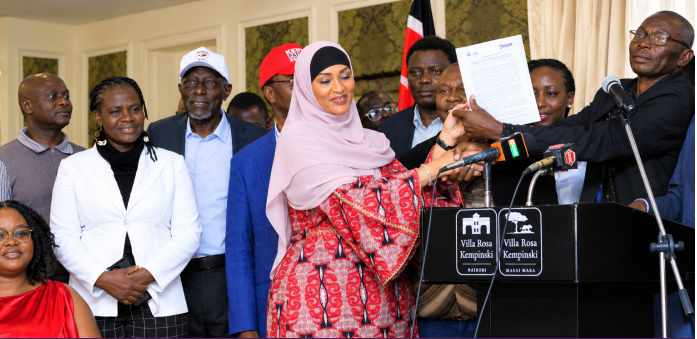
Cabinet Secretary for East African Community, Arid and Semi-Arid Lands and Regional Development, Hon. Beatrice Askul Moe, who hails from Turkana, thanked the Commission for bringing the concerns of the communities it met before Government. She noted that her ministry coordinates the development of the arid and semi-arid lands that cover most of Kenya’s territory. She committed that relief support would reach the households that need it most, including minority communities, women and households with persons with disabilities, and that Government records which do not capture these families would be corrected. On the Ilimanyang, she indicated her ministry’s support for the proposed medical camp.
Speaker of the Turkana County Assembly, Hon. Charles Lokiyoto Ewoi, described the Ilimanyang as “a special group” that the County already recognises in employment and decision-making, with members serving in county offices, including his own. He noted that many members cannot eat hard foods and depend on soft diets. He called for affirmative action that would treat an Ilimanyang candidate at a job interview in the same way as a person with disability
Together, the three positions mark a turning point. The Ilimanyang now stand before national and county decision-makers as rights holders with claims the Constitution already recognises.
Article 27(6) requires the State to take legislative and other measures, including affirmative action, to redress historical disadvantage. Article 56 obliges the State to put in place affirmative action programmes that give minorities and marginalised groups access to education, health, economic opportunities, employment and political representation. Article 204 establishes the Equalisation Fund for basic services in marginalised areas, and Article 260 defines the marginalised communities and groups these protections serve. Under Section 8 of the National Gender and Equality Commission Act, the Commission monitors, coordinates and advises on the mainstreaming of special interest groups, including minority and marginalised communities.
THE MEDICAL CAMP
The Commission resolved during the mission to convene stakeholders on their return to Nairobi, including the National Council for Persons with Disabilities. The Commission is now planning a multi-agency social medical camp in Kapua, bringing together government agencies, medical specialists, disability experts, development partners, academic institutions and humanitarian organisations.
The camp will undertake medical examinations and screening, conduct genetic and clinical assessments where feasible, and establish baseline demographic and health data on affected persons. It will support disability assessment and categorisation under the Persons with Disabilities Act, 2025, facilitate registration of eligible persons for disability-related services and benefits, and identify immediate medical, rehabilitative and psychosocial support needs. Persons found eligible will receive disability certification, placing them within the category of persons with disability alongside their minority and marginalised status.
Proper classification is the hinge on which the community’s prospects turn. Once affected persons are assessed and registered, they become eligible for the disability services and benefits the law provides. Once the community’s needs are documented, county and national planners have the evidence to include it in development plans and budgets.
The priorities emerging from the mission are specific: identity documents, education bursaries, health facilities within reach, clean water access points for cooling, specialised dermatological care and protective supplies, affirmative employment, political representation and ringfenced allocations in the Turkana County Integrated Development Plan.
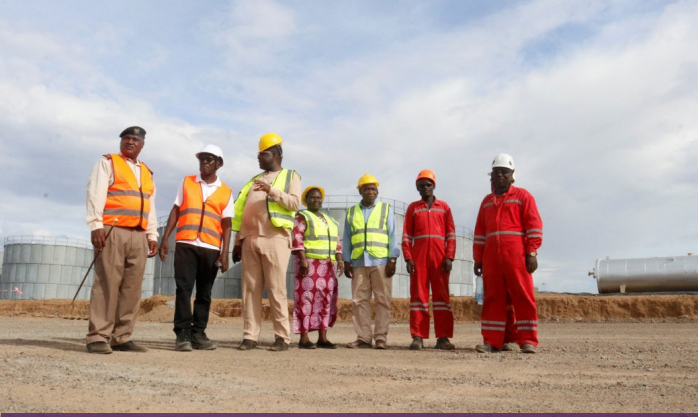
The same mission that met the Ilimanyang in Kapua also visited communities affected by oil and petroleum operations at Lokichar. In her remarks, the Chairperson reminded leaders that Turkana “has given Kenya its oil” and “has kept alive communities found nowhere else in this country.”
If the commitments made in Turkana this October translate into assessment, registration and sustained investment, the coming ten to fifteen years could produce outcomes Kapua has never seen. A child screened at the medical camp could finish school on a county bursary, graduate from a national university and return home as Turkana’s first Ilimanyang oil engineer, doctor or teacher. “Kenya owes Turkana an equality that arrives in time,” the Chairperson said.
The work of counting the Ilimanyang has begun, and the Commission intends to see it through.
In the eyes of the Constitution, no community is too small to count, and no community is too far to reach.” Hon. Rehema Jaldesa, Chairperson, National Gender and Equality Commission
.JPG)
