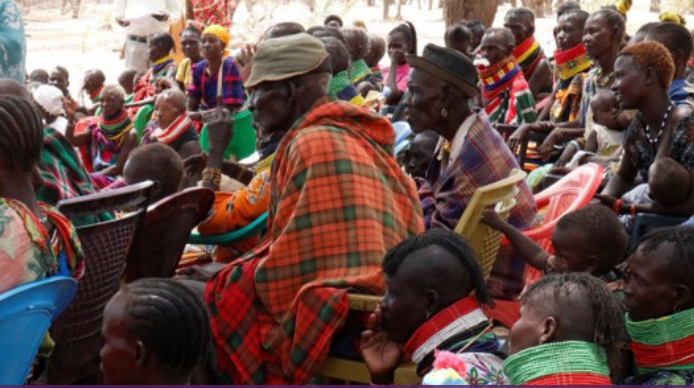
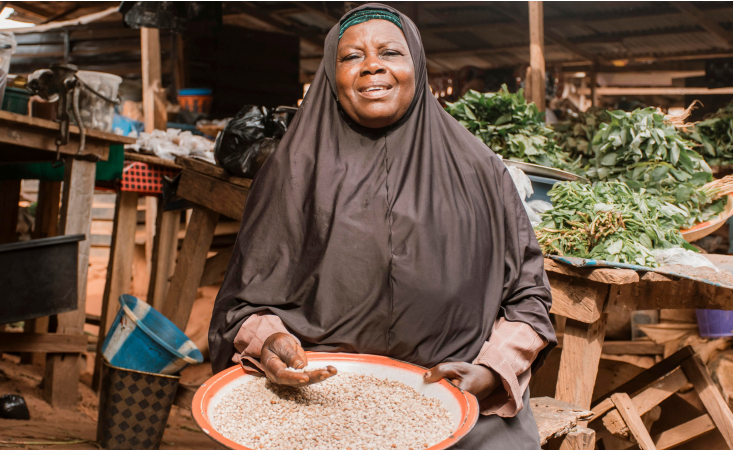
Before the first matatu hoots through Nairobi’s streets and before offices flicker to life, millions of Kenyan women have already begun a full day’s work. They cook, clean, fetch water, tend to farms, care for children, nurse the sick and support the elderly. It is work that sustains households, stabilises communities and quietly underpins the formal economy.
Yet it is work that is neither paid nor counted. Recent national estimates place the value of unpaid domestic and care work in Kenya at KSh 1.99 trillion equivalent to 23.1 per cent of the country’s Gross Domestic Product (GDP). This places it among the largest “sectors” of the economy, surpassing even some of the country’s most visible industries. Despite its scale, it remains largely invisible in policy, budgeting and economic planning. Unpaid care work in Kenya is profoundly gendered.
Women and girls perform the overwhelming majority of domestic and caregiving tasks, spending significantly more hours than men on activities such as cooking, cleaning, childcare and caring for dependent family members. In total, Kenyans spend an estimated 30.6 billion hours annually on unpaid domestic and care work with women contributing the largest share.
This imbalance is not accidental. It is rooted in long-standing social norms that define caregiving as women’s responsibility, often from an early age. The consequences are farreaching. Time spent on unpaid care work limits women’s access to education, formal employment and economic opportunities. It reduces their earning potential, constrains entrepreneurship and reinforces cycles of poverty particularly in rural and marginalised communities.
For many women, economic exclusion does not begin in the labour market. It begins at home. As Kenya pushes forward with policies aimed at empowering women economically, a critical gap remains: the failure to address unpaid care work.
This reality came into sharp focus in Kitui County, where the National Gender and Equality Commission’s Kitui Regional Office joined a high-level delegation to advance implementation of the National Policy on The delegation comprising UN Women, the State Department for Gender and Affirmative Action, and the University of Nairobi Women Economic Empowerment Hub held strategic discussions with county leadership to localise the policy framework.
At the heart of the engagement was a simple but powerful realisation: women cannot fully participate in the economy if they remain disproportionately responsible for unpaid care work.
Stakeholders identified priority actions tailored to Kitui’s context, emphasising coordinated implementation, inclusive planning and practical interventions that translate policy into tangible outcomes.
The Kitui engagement marked the culmination of a two-day sensitisation workshop that brought together government actors, development partners and community stakeholders. The focus was not merely on policy awareness, but on operationalising solutions.
These included expanding access to essential services such as water, healthcare and childcare investments that directly reduce the time women spend on unpaid tasks. Improved infrastructure, for instance, can significantly cut the hours spent fetching water or fuel, freeing time for education, income-generating activities and community participation.
Equally important is strengthening social protection systems that support vulnerable households, particularly those headed by women or caring for dependants. The message from stakeholders was clear: economic empowerment cannot be achieved in isolation from the realities of unpaid labour.
A national and global imperative
The issue of unpaid care work is central to the achievement of the Sustainable Development Goals (SDGs), particularly Goal 5 on gender equality.
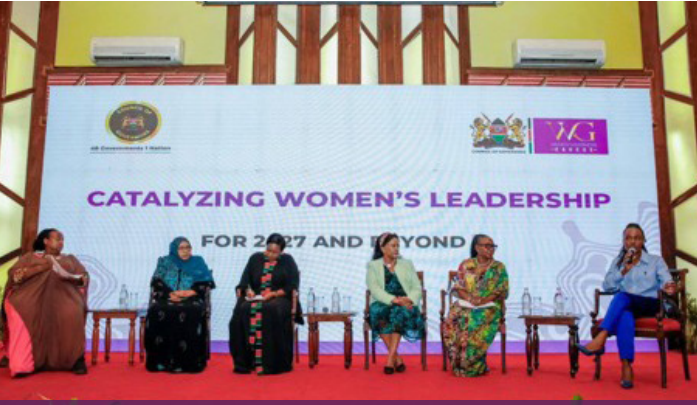
Speaking during the 2025 SDGs National Multi-Stakeholders Conference, NGEC Chairperson Hon. Rehema Jaldesa underscored the urgency of addressing this long-standing imbalance.
She emphasised that unpaid domestic and care work predominantly performed by women and girls remains a critical barrier to inclusive development.
The Commission reaffirmed that achieving the SDGs in Kenya depends on an equitable development agenda that upholds constitutional principles of equality, non-discrimination and meaningful participation.
Globally, the conversation is gaining traction. Countries are increasingly recognising the economic value of unpaid care work and exploring ways to integrate it into national accounting systems. Kenya’s development of a Household Satellite Account represents a significant step in this direction, offering a more comprehensive picture of economic activity beyond traditional GDP measures.
The policy gap
Despite growing recognition, policy responses to unpaid care work remain limited. While Kenya has made progress in advancing gender responsive policies, implementation gaps persist particularly at the county level, where service delivery directly impacts households.
Stakeholders in Kitui emphasised the need for stronger coordination among national and county governments, development partners and community organisations. Without alignment, even well-designed policies risk failing to deliver meaningful change. There is also a need for targeted investment in care infrastructure including childcare services, eldercare systems and community health support to reduce the burden on households. Such investments are not merely social interventions. They are economic enablers that unlock productivity and expand labour force participation.
Rethinking value and work
At its core, the debate on unpaid care work challenges how societies define and value work. By excluding domestic and care labour from economic metrics, traditional systems have undervalued contributions that are essential to human wellbeing and economic stability.
Recognising unpaid care work is not simply about assigning it a
monetary value. It is about reshaping policy priorities and ensuring that those who perform this work primarily women are supported,
protected and empowered.
This requires a cultural shift alongside policy reform. Redistributing care responsibilities within households, promoting male involvement in caregiving and challenging entrenched gender norms are critical components of long-term change.
The momentum seen in Kitui signals a broader shift in Kenya’s approach to women’s economic empowerment. There is a growing consensus that unpaid care work must move from the margins of policy discussions to the centre of development planning. For the National Gender and Equality Commission, this is not just an economic issue. It is a matter of equality, inclusion and justice.As Kenya moves toward 2030, the path to inclusive growth will depend on whether it can confront the realities that have long been overlooked.