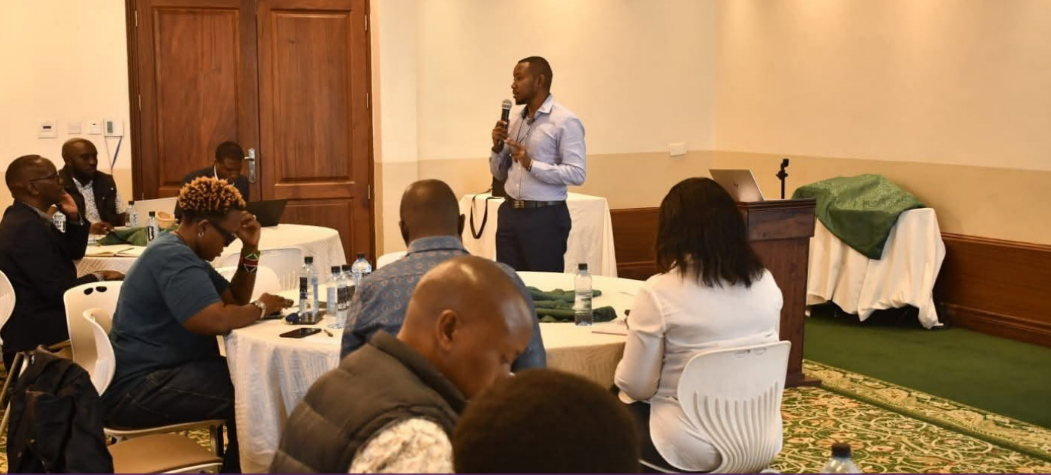
The Commission’s Nakuru Regional Office joined the Citizens’ Election Watch meeting convened by the Center for Transformational Leadership in partnership with URAIA Trust, bringing stakeholders together to examine what the last General Election revealed and what citizens can do to safeguard a more inclusive and peaceful 2027.
The Commission presented evidence from its monitoring of the 2022 General Election on the participation of Special Interest Groups, covering women, youth, persons with disabilities, older persons, minorities and marginalised communities in their capacities as voters, candidates, agents and electoral officials. The monitoring examined campaign financing, access to information, accessibility, gender-based violence and electoral malpractice.
The findings have not lost their relevance. While the 2022 campaigns were generally peaceful, the Commission documented intimidation affecting candidates and voters from Special Interest Groups, alongside financial and structural barriers that limited the capacity of women, youth and persons with disabilities to campaign effectively.
The conclusion drawn in Nakuru was that preparedness for 2027 cannot be reduced to election-day logistics. Inclusive democracy begins earlier, with the ability to register, obtain information, participate inside a political party, contest for office, campaign without fear, vote without intimidation and have the resulting choice respected. Each of those is a separate point of failure, and each has its own deadline in the electoral calendar.
The Commission continues to engage Government institutions, electoral actors, civil society, communities and partners on safeguards for equality and peaceful political processes, and on an environment in which political difference is managed through dialogue rather than intimidation, violence or discrimination.
.JPG)