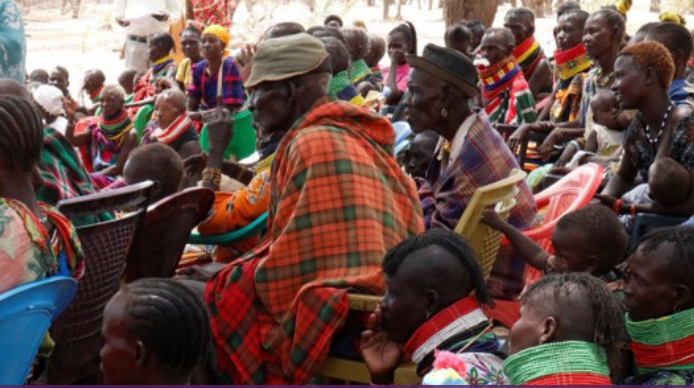
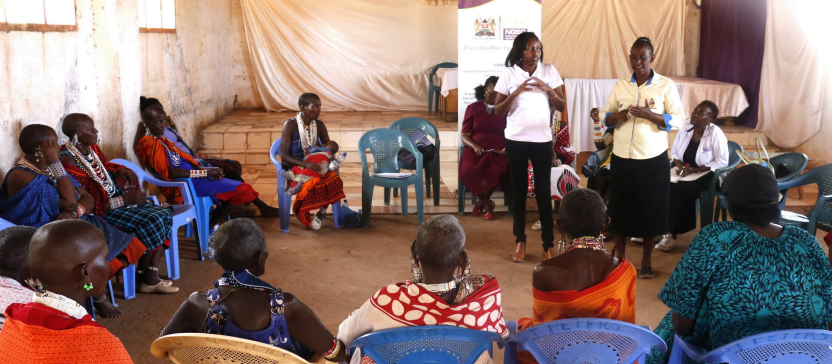
In Torosei village, in Kajiado West Constituency, widowhood has too often marked the beginning of a second crisis.
During a recent field assessment, the National Gender and Equality Commission encountered women whose lives had been reshaped not only by bereavement, but by dispossession. Many came from polygamous households. After the death of a husband, land boundaries shifted without consent. Livestock was claimed. Homes were contested. In some cases, widows and their children were pushed to the margins of family property or forced to leave altogether.
For a Commission mandated to promote equality and freedom from discrimination, this was not an isolated social issue. It was a constitutional question.
Poverty Deepened by Exclusion
In Torosei, poverty is not abstract. It is visible in the droughtstricken fields where livestock losses have erased years of household investment. It is evident in the long stretches of impassable road separating widows from government offices where succession processes are initiated. It is present in the stories of women who lack title documents, who have never accessed pensions, and whose children remain unregistered or without support.
The Commission documented cases affecting widows, orphaned children, and persons with disabilities. Some families had not completed death registration. Others had not initiated succession proceedings due to cost, distance, or intimidation. Without formal recognition, they could not access social protection, bursaries, or health services. Loss of a spouse had translated into loss of legal visibility.
Discrimination and exploitation were recurring themes. Cultural expectations in polygamous settings often placed widows in subordinate positions, particularly where property was informally managed. The absence of enforceable safeguards left many vulnerable to coercion, eviction, and stigma.
These realities sit at the core of the Commission’s mandate. The Constitution affirms dignity, equality, non-discrimination, and equal rights within marriage. Where widowhood triggers exclusion, the constitutional promise is interrupted.
From Lived Experience to Legislative Protection
It is against this backdrop that the Commission is intensifying rights sensitisation in affected communities and spearheading the drafting of the Widowed Persons Protection Bill, 2026, a comprehensive rights-based framework designed to close these gaps.
The Bill recognizes widowhood as a distinct legal status deserving structured protection. It applies to all widowed persons regardless of gender, age, culture, religion, marital regime, or social status. It binds national and county governments, institutions, communities, and individuals. In Torosei, widows spoke of being told theycould not remain in their matrimonial homes. Under the proposed law, the right to continue occupying the matrimonial home without interference or unlawful eviction would be expressly protected. Any eviction or deprivation of property carried out contrary to the Act would be null and void and subject to criminal sanction.
Several women described pressure to accept cultural practices they did not consent to, including forms of widow inheritance. The Bill explicitly prohibits harmful practices such as forced remarriage, widow cleansing, degrading rites, and stigmatization. It criminalizes property grabbing and interference with a deceased person’s estate, reinforcing existing protections under succession law.
In households where children’s custody became a point of conflict, the proposed framework affirms the right of a widowed parent to retain custody unless a court determines otherwise in the best interests of the child. This provision speaks directly to the insecurity expressed by mothers in Kajiado West who feared losing both home and children.
The Bill also guarantees widowed persons the right to equality and freedom from discrimination, the right to dignity and protection from cruel, inhuman, or degrading treatment, and the right to remarry without forfeiting inheritance rights. These are not symbolic declarations. They are enforceable rights anchored in constitutional principles.
Access to Justice and Services
A recurring barrier in Torosei was distance. Poor infrastructure and limited information prevented widows from navigating succession processes, pension claims, and social assistance systems.
The proposed law assigns clear obligations to both levels of government. The national government would be responsible for policy development, enforcement, public education, legal aid, and assistance with succession and pension processes. County governments would be required to establish complementary structures, maintain registries of widowed and orphaned persons, fund legal aid services, and create emergency shelters for displaced widowed persons.
Chiefs and local administrators would have statutory duties to maintain disaggregated records, prevent unlawful evictions, document harmful practices, and report violations. Neglect of duty would attract disciplinary consequences. In areas such as Kajiado West, where local administrative presence is often the first point of state contact, this provision is significant.
The Bill also guarantees access to health services, including bereavement counselling and psychosocial support. In Torosei, the emotional toll of widowhood was as visible as the economic loss. Recognition of mental health and social support as rights aligns with the Commission’s broader commitment to holistic equality.
Data, Dignity, and Structural Accountability
One of the most striking findings during the field visit was the absence of reliable data. Without registration or formal recognition, many widows remain statistically invisible.
The proposed legislation requires the Kenya National Bureau of Statistics to recognize widowed persons as a distinct demographic category in national censuses. It mandates periodic research and coordinated data management. Accurate data is not administrative detail. It is the foundation for targeted policy, budgeting, and accountability.
To oversee implementation, the Bill establishes a Widowed Persons Protection Board with a mandate to advise government on law reform, monitor violations, manage national data, promote awareness, and facilitate access to justice and support services. Its composition would reflect gender balance, regional diversity, inclusion of persons with disabilities, and direct representation of widowed persons. This structure reflects the Commission’s emphasis on participation and inclusion.
A dedicated funding framework would support economic empowerment initiatives, emergency relief, bursaries for orphaned children, health insurance, shelters, and counselling services. Strict financial accountability measures would ensure oversight consistent with public finance law.
Equality as Lived Protection
The situation in Torosei is not unique to one village or one constituency. It reflects structural gaps that expose widowed persons to heightened risk of poverty, violence, and exclusion.
For the National Gender and Equality Commission, the response is twofold. First, intensify rights sensitisation and public education so that widows, families, and local leaders understand existing legal protections. Second, support the enactment of a comprehensive legislative framework that transforms constitutional guarantees into enforceable, practical safeguards.
Widowhood should not trigger eviction, dispossession, or social isolation. It should not sever a woman from her home, her children, or her livelihood. The Constitution speaks of dignity and equality as inherent and inalienable. The lived experiences in Kajiado West reveal how fragile those principles can become without structured protection.
The proposed Widowed Persons Protection Bill offers a path toward restoring structural trust between vulnerable families and the institutions meant to serve them. In doing so, it aligns squarely with the Commission’s mandate to promote equality, protect human rights, and ensure that no Kenyan is rendered invisible at the moment they are most in need of protection.