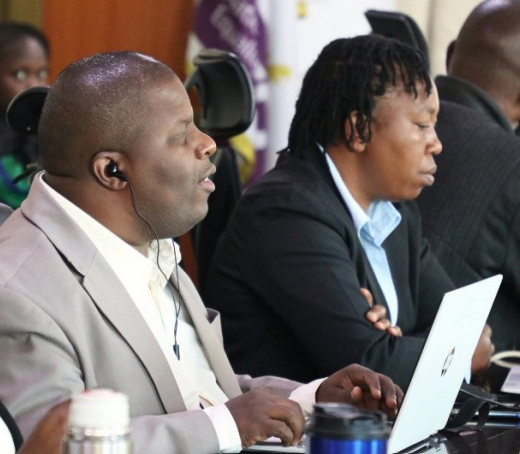
The Commission convened Organisations of Persons with Disabilities (OPDs) and other stakeholders for a consultative meeting on operationalising the Persons with Disabilities Act, 2025, held under the theme “From Legislation to Action: Operationalising the Persons with Disabilities Act, 2025”.
The enactment of the Act marked a milestone in Kenya’s progress towards equality, dignity and full inclusion. It also opened the harder phase. A law changes nothing on the day it is assented to. What changes lives are the regulations, budget lines, standards and institutional procedures that follow, and the decisions taken while drafting them about who must comply, by when, and with what consequence for failing to do so.
The meeting set out to strengthen stakeholders’ understanding of the Act, clarify the steps involved in developing the regulations required for implementation, and identify how persons with disabilities can take an active part in the regulatory process.
Persons with disabilities and their representative organisations are not beneficiaries of the law. They are rights holders, and their experience, knowledge and judgement should shape the regulations, policies and institutional mechanisms intended to advance disability inclusion. The principle is settled in law. The practice is decided meeting by meeting, in decisions about who is invited, how early, and whether what they say survives into the next draft.
Participation on equal terms requires more than an invitation. It requires information in accessible formats, reasonable accommodation, consultation early enough to influence the outcome, and deliberate attention to the range of experience among persons with physical, sensory, intellectual and psychosocial disabilities. Women, children, young people and older persons with disabilities face intersecting barriers that a single consultation format will not capture.
Operationalising the Act is an opportunity to address barriers that have persisted across education, employment, healthcare, political participation, access to justice, social protection, information and communication, transport and the built environment. It also requires stronger accountability from public and private institutions, so that disability inclusion is built into planning, budgeting, service delivery and decision-making rather than added once those decisions are made.
The Commission’s role in the process follows from its mandate under the Constitution and the National Gender and Equality Commission Act, 2011 to monitor compliance with the principle of equality and freedom from discrimination. Regulations drafted without the involvement of those they govern are difficult to enforce and easy to disregard, and the record of consultation becomes part of the evidence by which implementation is later judged.
The route from legislation to action runs through sustained collaboration among government institutions, OPDs, civil society, the private sector and communities. A strong law is an important beginning. Its value will be determined by how far it changes lives.
.JPG)