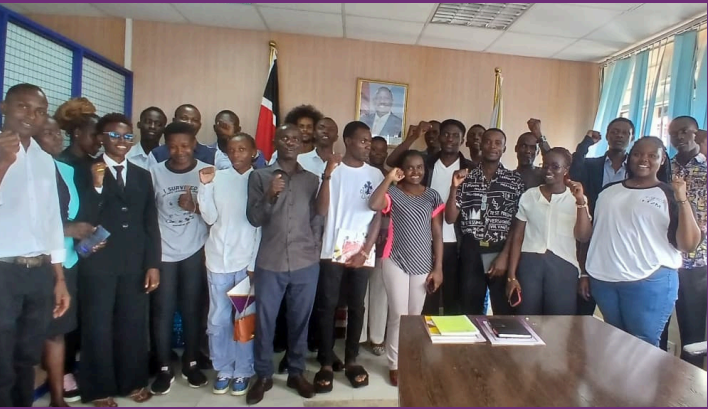
A growing call for meaningful youth inclusion in governance took centre stage in Kisumu when the National Gender and Equality Commission (NGEC) Regional Office convened more than 20 young people drawn from universities, colleges, human rights institutions and community social justice centres. The engagement provided a forum for frank discussions on youth participation in politics, leadership and civic processes, with participants questioning continued exclusion from decision-making spaces despite their active role in shaping public discourse and democratic engagement.
Participants noted that young people remain highly visible in civic conversations, advocacy movements and digital platforms, yet continue to experience limited representation in formal governance structures. The dialogue examined the gap between symbolic participation and actual decision-making power, with youth calling for structured pathways that allow them to influence policy, leadership and governance outcomes in a more direct and sustained manner. Speakers argued that treating young people as future leaders alone fails to reflect their current contribution to civic life and democratic processes. Unemployment was identified as one of the most pressing challenges influencing youth participation in governance and civic activities. Participants observed that limited access to economic opportunities continues to constrain meaningful engagement in leadership and public life, while increasing vulnerability to social and political manipulation.
The discussions linked economic exclusion to broader frustrations among young people, particularly in relation to access to opportunities and representation in leadership structures. The forum also highlighted concerns over political violence, including the reported use of organised groups commonly referred to as goons during political activities. Participants said such practices discourage peaceful participation and create an environment of fear that undermines democratic engagement. They stressed that violence and intimidation during political processes disproportionately affect young people, many of whom are often at the forefront of civic and electoral participation.
The need for stronger enforcement of laws protecting peaceful participation in political and civic processes was emphasised. Participants expressed concern over shrinking civic spaces and increasing restrictions on freedom of expression and association.
They noted that limited access to decision-making platforms and inadequate consultation processes continue to exclude youth voices from governance systems. This exclusion, they said, has contributed to growing frustration among young people, particularly those actively engaged in civic education, advocacy and community organising.
A key focus of the engagement was the increasing prevalence of Technology-Facilitated Gender-Based Violence (TFGBV), particularly targeting young women in leadership and civic spaces. Participants reported rising cases of online harassment, cyberbullying and intimidation aimed at silencing young women participating in public discourse and leadership. The discussions noted that digital platforms, while expanding opportunities for civic engagement, have also become spaces where abuse and exclusion occur, particularly against women and other vulnerable groups.
Stakeholders emphasised that such violence undermines democratic participation and discourages young women from pursuing leadership roles. The engagement observed a notable shift in youth participation trends, with more young people moving from online activism and protest movements towards structured civic engagement. Participants highlighted increased interest in voter registration, leadership development and policy discussions ahead of the 2027 electoral period. This shift was described as a transition towards more formal engagement with governance systems and democratic institutions.
Stakeholders encouraged young people to take advantage of existing institutional frameworks to strengthen their participation in decision-making processes. The Commission reaffirmed its commitment to promoting inclusive participation, equality and non-discrimination, with particular focus on youth, women and other vulnerable groups. The Commission emphasised the importance of strengthening civic awareness, expanding participation opportunities and supporting safer engagement in governance processes. Through regional dialogues, NGEC continues to support efforts aimed at ensuring that young people are not only participants in civic life but also active contributors to leadership and decision-making systems.