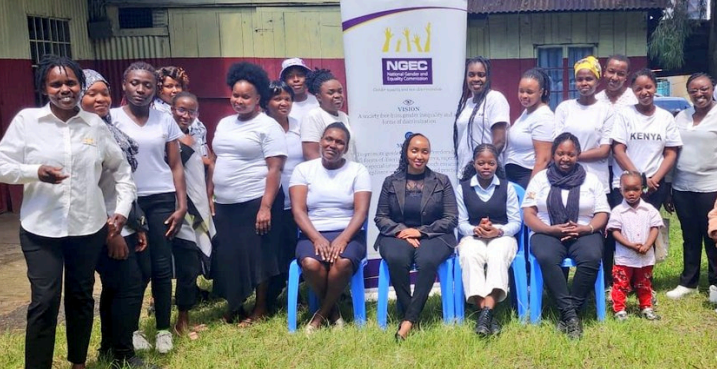
Calls for practical inclusion and removal of systemic barriers took centre stage in Nakuru as the National Gender and Equality Commission (NGEC) engaged the Nakuru Queen Deaf Organisation in a focused dialogue on advancing the rights of deaf women, girls and persons with disabilities. The engagement examined the gap between constitutional guarantees and everyday lived realities, with participants citing continued exclusion from essential services, economic opportunities and justice systems due to communication, institutional and social barriers.
The discussions highlighted multiple challenges affecting the deaf community and persons with disabilities in Nakuru County, particularly in accessing employment, education and healthcare services. Participants noted that limited availability of sign language interpretation services in public institutions remains a major barrier to effective communication and service delivery. The absence of accessible communication channels was identified as a key factor contributing to exclusion from public participation processes and essential government services.
Stakeholders raised concerns over continued discrimination against persons with disabilities in employment and economic participation.
Despite existing legal and constitutional protections promoting equality and nondiscrimination, participants observed that many persons with disabilities remain excluded from job opportunities and income-generating activities. Despite existing legal and constitutional protections promoting equality and non-discrimination, participants observed that many persons with disabilities remain excluded from job opportunities and income-generating activities.
The engagement also highlighted broader exclusion from development programmes and public services, limiting participation in economic and social life. Participants further raised concerns regarding access to justice, particularly in relation to property ownership and inheritance rights. Communication barriers within legal systems were identified as a significant challenge, limiting the ability of deaf persons and other persons with disabilities to fully engage in legal processes.
The discussions emphasised the need for strengthened legal aid support, accessible court services and improved interpretation services within justice institutions. A key focus of the engagement was the heightened vulnerability of women and girls with disabilities to violence, discrimination and social exclusion.
Participants noted that intersecting forms of discrimination based on gender and disability increase exposure to abuse while reducing access to protection and reporting mechanisms. The discussions called for stronger safeguarding systems, improved reporting pathways and targeted protection measures for women and girls with disabilities.
Stakeholders emphasised the importance of strengthening accessibility across public systems to ensure meaningful participation of persons with disabilities. This includes improvements in communication access, infrastructure and service delivery within government institutions, health facilities, education systems and public programmes.
Participants noted that inclusion requires deliberate system design that accommodates diverse needs rather than ad hoc adjustments. The engagement reflected broader national conversations on disability inclusion, accessibility and equal opportunity in Kenya. Stakeholders noted increased attention to the need for inclusive public systems that enable persons with disabilities to participate fully in governance, development and community life. The discussions reinforced the importance of translating policy commitments into practical, measurable changes in service delivery and institutional practice.
The Commission reaffirmed its commitment to promoting equality, accessibility and nondiscrimination for persons with disabilities. The Commission noted its continued efforts to support initiatives that remove structural barriers and strengthen inclusion of special interest groups in all sectors of society. Through engagements such as this, NGEC continues to promote systems that uphold dignity, participation and equal opportunity for persons with disabilities.
The dialogue between NGEC and the Nakuru Queen Deaf Organisation highlighted persistent gaps between policy and practice in the inclusion of persons with disabilities. While legal frameworks exist to support equality and nondiscrimination, participants noted that implementation challenges continue to limit full participation in social, economic and civic life. The engagement concluded with renewed calls for strengthened accessibility measures, improved communication systems and coordinated action to ensure meaningful inclusion of persons with disabilities across all sectors of society.