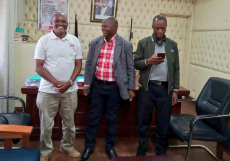
Kirinyaga County — In a quiet but powerful moment of statecraft, the National Gender and Equality Commission’s (NGEC) Kitui Regional Office paid a courtesy call to the Kirinyaga County Commissioner this week. Though seemingly routine in form, the meeting signals a turning point in the nation’s fight for social justice— one where the invisible becomes visible, and the unpaid finally count.
The meeting, which precedes the much-anticipated Quarter Four Equality and Inclusion Technical Working Group (EITWG) Coordination Meeting, set its sights on a historic objective: mainstreaming unpaid care and domestic work into county development frameworks through the rollout of the National Care Work Policy.
It’s a bold move, considering the economic and gender dynamics at play. According to recent data, women in Kenya perform over 75% of all unpaid care work, from childrearing and elder care to domestic chores. Yet, they remain starkly underrepresented in the corridors where economic decisions are made. This contradiction—between contribution and recognition—has been one of Kenya’s most persistent barriers to gender equality.
You cannot speak of inclusive development if the labour that sustains households, communities, and the economy is omitted from policy and planning,” stated Dr. Moses Saranta, Regional head at NGEC-Kitui, during the meeting. “This policy brings the work of millions of women into the realm of rights and responsibility—no longer charity, but equity.”
Unpaid care work has long been sidelined in Kenya’s national accounting systems. It is labour that underpins the productivity of all other sectors, yet it has no monetary value in GDP calculations. Women, especially those from marginalised and special interest groups, often find themselves caught in a cycle where caregiving excludes them from education, employment, and leadership. The burden is both economic and emotional, and its invisibility compounds its weight.
NGEC’s commitment is further cemented by its work in facilitating affirmative action, conducting audits on SIG inclusion, building data repositories, and ensuring that Kenya meets its international obligations, including the Beijing Platform for Action and SDG 5 on Gender Equality.
The EITWG model—Equality and Inclusion Technical Working Groups—brings together civil society, public officials, and stakeholders to harmonise approaches, share data, and monitor progress. Quarter 4’s coordination meeting is expected to solidify commitments from counties to establish localised action plans for care work, with NGEC offering technical guidance and compliance monitoring.