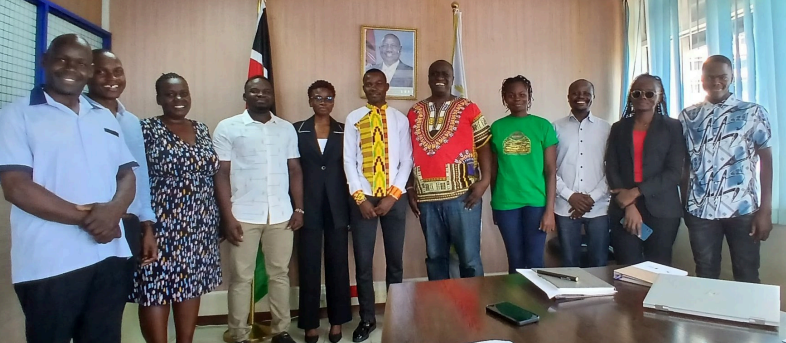
The National Gender and Equality Commission (NGEC) Kisumu Regional Office has convened members of the Winam Community Social Justice Centre and Kondele Social Justice Centre, alongside university students, interns and young volunteers, in a structured engagement aimed at strengthening awareness on equality, inclusion, access to justice and community participation. The forum brought together grassroots actors and young people to deepen understanding of rights protection systems while examining emerging social challenges affecting vulnerable groups in Kisumu County and surrounding regions.
The engagement provided a structured platform for dialogue between institutional actors and community-based social justice groups on issues of equality and access to justice. Participants exchanged experiences on community advocacy work, including documentation of rights violations and engagement with relevant institutions responsible for justice and protection services. The discussions emphasised the importance of linking grassroots structures with formal governance and justice systems to improve responsiveness and strengthen accountability in service delivery.
Young participants, including university students and interns, highlighted the need for continuous civic education to strengthen understanding of rights and institutional processes. A key focus of the engagement was the role of young people in advancing equality, inclusion and community accountability. Participants discussed the importance of building advocacy skills among youth, particularly in documenting cases, engaging institutions and raising awareness on rights and responsibilities within communities.
The session underscored the growing role of youth-led initiatives in addressing social challenges and strengthening access to justice at the community level.
Stakeholders noted that empowering young people with knowledge and practical tools enhances their ability to participate meaningfully in governance and protection systems. Participants raised concerns over insecurity and rising incidents of organised violence in some areas, commonly referred to as goonism. These security challenges were linked to broader social and economic pressures affecting communities, particularly young people. Youth unemployment was identified as a significant contributing factor, with participants noting its role in increasing vulnerability to crime and social instability.
The discussions called for strengthened multisectoral responses to address both the social and economic drivers of insecurity. The engagement also highlighted increasing cases of sexual and gender-based violence within the region. Participants noted that survivors often face challenges in reporting incidents and accessing timely support services, including justice, medical care and psychosocial assistance. The discussions emphasised the need for stronger prevention strategies, improved reporting mechanisms and enhanced coordination among institutions involved in GBV response. Stakeholders stressed that effective protection systems must prioritise survivor safety, dignity and access to comprehensive support services. The session further addressed concerns over the growing number of street-connected children, highlighting the need for strengthened child protection systems and social support interventions.
Participants also raised issues related to reported sexual exploitation in gold mining areas within Siaya County, describing it as an urgent protection concern requiring coordinated institutional attention.
These discussions underscored the importance of targeted interventions in high-risk environments, particularly where informal economic activities increase vulnerability to exploitation. Stakeholders also expressed concern over the potential social impact of the proposed nuclear power project, particularly on vulnerable communities. Participants emphasised the importance of inclusive public participation processes in major development projects to ensure that communities are adequately informed and meaningfully engaged.
The engagement reaffirmed the importance of strengthening partnerships between community-based organisations, youth groups, civil society actors and government institutions. The Commission reiterated its commitment to promoting equality, inclusion and nondiscrimination, with a focus on special interest groups including women, youth, persons with disabilities and marginalised communities.
Through regional engagements such as this, the Commission continues to strengthen community-based approaches to rights awareness, advocacy and protection. The engagement reflects ongoing efforts to ensure that vulnerable groups are informed, protected and meaningfully included in governance and development processes.