NAIROBI, Kenya — As Africa accelerates efforts to modernise its agricultural systems through technology, climate-smart innovation and expanded value chains, questions around inclusion and equity are gaining renewed urgency.
These issues came into sharp focus during the 12th edition of the Agritech Expo and Conference held at the Kenyatta International Convention Centre (KICC), where the National Gender and Equality Commission (NGEC) joined policymakers, researchers, development partners, private sector actors, innovators and farmer organisations from across Africa to deliberate on the future of food systems transformation.
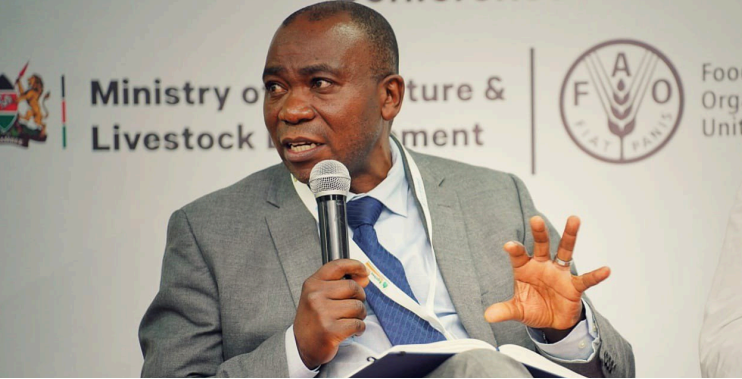
Representing the Commission, Mr Paul Kuria, Director of Programmes and Research, participated in the high-level engagements and served as a panellist in a thematic discussion on inclusive agricultural transformation. His intervention centred on the need to deliberately integrate equality and social inclusion considerations into agricultural policies, programmes and investment frameworks.
He underscored that while agritech innovation and climate-smart agriculture are reshaping food production systems across the continent, the benefits of these advancements risk remaining unevenly distributed unless inclusion is embedded at the core of policy design and implementation.
In particular, Mr Kuria emphasised the importance of ensuring that women and persons with disabilities are not treated as peripheral beneficiaries but as central actors in agricultural transformation.
His remarks reflected a growing body of evidence indicating that agricultural productivity and food security outcomes improve significantly when women farmers, smallholder producers and marginalised groups have equal access to resources, training, finance and markets. Across Africa, women make up a substantial proportion of the agricultural workforce, particularly in rural areas, yet continue to face structural barriers including limited access to land ownership, credit, agricultural inputs, mechanisation and extension services. Persons with disabilities, meanwhile, often encounter physical, informational and systemic barriers that limit participation in agribusiness value chains.
The Agritech Expo, which coincided with the commemoration of International Rural Women's Day, placed a spotlight on these realities, recognising the critical role rural women play in food production, household nutrition and local economies. Participants noted that despite their central contribution, rural women often remain concentrated in low-value segments of agricultural production, with limited opportunities to transition into commercially viable and resilient agribusiness enterprises.
The conference therefore explored pathways for strengthening innovation ecosystems that support rural women and marginalised groups to move up the agricultural value chain through access to technology, finance, training and markets. Discussions at the forum focused on key themes shaping the future of agriculture in Africa, including agritech innovation, climate-smart agriculture, digital solutions for farming systems, access to finance, and value chain development.
Stakeholders observed that agriculture across the continent is undergoing rapid transformation driven by population growth, climate change, shifting market demands and technological advancement.
However, experts cautioned that without deliberate policy interventions, these transformations could deepen existing inequalities rather than reduce them.
NGEC's participation aligned with its constitutional mandate to promote equality and freedom from discrimination, particularly through mainstreaming inclusion across sectors and ensuring that development frameworks respond to the needs of Special Interest Groups. Mr Kuria reiterated that inclusive agricultural transformation requires more than technological adoption. It requires intentional policy choices that address structural barriers and ensure equitable participation in economic opportunities.
He further highlighted that equality considerations must be embedded in agricultural planning, research, financing systems and innovation ecosystems to ensure that no group is left behind in the sector's modernization agenda. Participants noted that young people are increasingly becoming key drivers of innovation in agriculture, particularly through digital platforms, data-driven farming solutions and agri-entrepreneurship ventures.