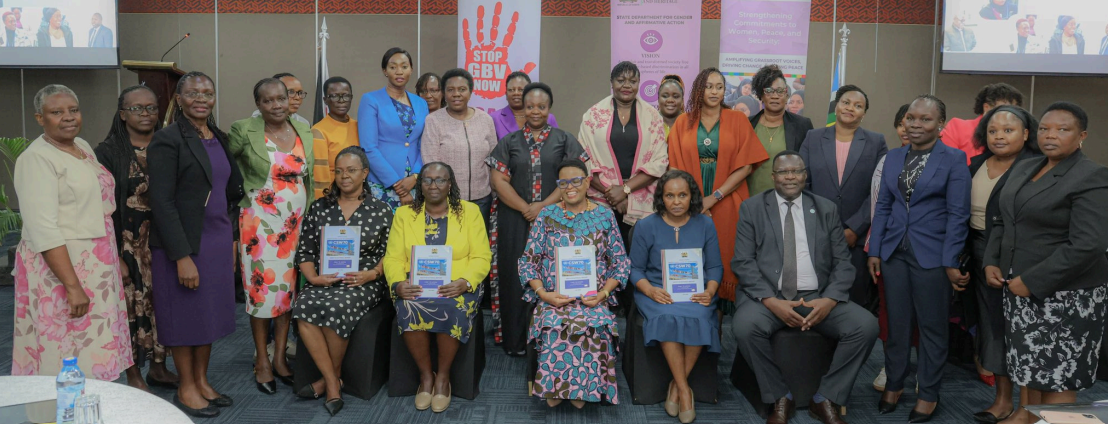
Kenya has renewed its commitment to ending Gender-Based Violence (GBV) and strengthening access to justice for women and girls during the Post-CSW70 National Stakeholders’ Forum, where leaders and partners called for urgent, coordinated action in response to rising cases of violence. The forum brought together senior government officials, the Judiciary, Parliament, county governments, civil society, development partners, academia, the private sector and the media to reinforce national strategies on prevention, accountability and survivor support.
The forum was attended by Chief Justice Martha Koome, Cabinet Secretary for Gender, Culture and Children Services Hon. Hanna Cheptumo, Principal Secretary for Gender Affairs and Affirmative Action Anne Wangombe, and Antonia Sodonon, alongside representatives from Parliament, county governments, civil society organisations, development partners, academia and the private sector. Discussions focused on strengthening coordination across institutions to improve prevention, response and accountability mechanisms addressing GBV.
Participants noted the continued increase in reported cases of violence against women and girls, describing it as a persistent national concern requiring urgent and sustained intervention.
The forum was held against a backdrop of growing concern over increasing cases of violence affecting women and girls across the country. Participants noted that these trends highlight the urgent need for stronger prevention mechanisms, improved reporting systems and more effective survivor-centred responses within justice and support structures. The discussions underscored that GBV remains a structural and social challenge requiring sustained and coordinated action at all levels. Stakeholders reaffirmed the importance of strengthening justice systems to ensure they are accessible, responsive and centred on the needs of survivors.
Key priorities discussed included improving reporting mechanisms, enhancing protection services, and ensuring timely accountability processes within the justice system. The role of coordinated institutional frameworks was highlighted as essential in ensuring that survivors are not only protected but also supported through recovery and justice processes. The engagement also examined underlying social and structural factors that continue to expose women and girls to violence and exclusion.Participants noted that inequality, discrimination and harmful social norms remain key drivers of vulnerability, requiring long-term interventions that go beyond immediate response measures.
Speaking during the forum, NGEC Vice Chairperson Thomas Koyier called for stronger institutional coordination to translate commitments into measurable impact.
“We must move from commitments on paper to coordinated action that is visible in the lives of women and girls,” he said. “Ending gender-based violence requires institutions to work together, not in isolation, if we are to close the gaps that continue to expose survivors to harm.”
He further emphasised the importance of strengthening prevention systems and ensuring accountability at all levels. “Prevention must remain at the centre of our response. We cannot continue to respond after harm has already occurred while the root causes remain unaddressed,” Koyier noted.
The National Gender and Equality Commission reaffirmed its commitment to advancing equality, protecting human dignity and ensuring access to justice for survivors of GBV. Koyier reiterated the Commission’s role in supporting coordinated institutional frameworks.
“Our collective responsibility is to ensure that every woman and girl lives free from violence, fear and discrimination. This is not optional; it is a constitutional imperative,” he stated.