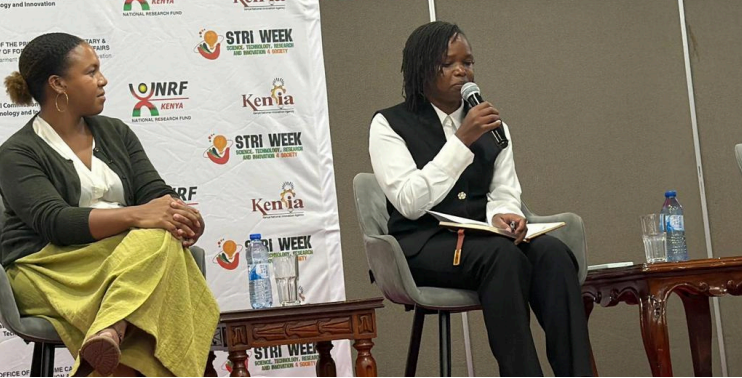
The Chief Executive Officer of the National Gender and Equality Commission (NGEC), Dr Purity Ngina, has called for the deliberate integration of Gender Equality and Social Inclusion (GESI) principles into Kenya’s research, innovation and policy development systems. Speaking during the 2026 Science, Research and Innovation Week for Society, Dr Ngina participated in a panel discussion themed “Establishing Inclusive and Impact-Oriented National Research and Innovation Systems,” where she underscored the need to reform research financing, data collection and governance structures to ensure equitable participation and representation of all population groups.
Dr. Ngina emphasised that national research and innovation systems must be designed to reflect the diversity of society and address long-standing structural exclusions. She noted that women, youth, persons with disabilities, and individuals from minority and marginalised communities continue to face systemic barriers in accessing research opportunities, funding and representation within knowledge production systems. The CEO stressed that embedding GESI principles within research frameworks is essential to ensuring that innovation outcomes are inclusive and responsive to the needs of all citizens. A key highlight of the discussion was the need to strengthen accountability within research governance and financing systems. Dr. Ngina pointed out that equitable allocation of research funding remains critical in addressing disparities that affect underserved populations.
She called for transparent and accountable mechanisms that ensure research resources are distributed fairly and support studies that reflect diverse social realities and development needs. The discussion also underscored the importance of strengthening oversight structures to ensure that research investments translate into meaningful and inclusive policy outcomes.
Dr Ngina further emphasised the need for consistent collection and use of disaggregated data in research and policy formulation processes.
She noted that data broken down by gender, age, disability status and other social characteristics is essential for identifying gaps and informing targeted interventions. The absence of such data, she observed, continues to limit the ability of policymakers to design inclusive programmes and effectively monitor progress on equality and inclusion. Stakeholders at the forum acknowledged that data-driven decision-making is central to achieving equitable national development outcomes.
The panel discussion highlighted persistent systemic gaps within research and innovation ecosystems that contribute to exclusion. These gaps include limited access to funding opportunities, inadequate representation in research leadership, and insufficient integration of inclusion principles in innovation frameworks. Dr Ngina noted that addressing these challenges requires deliberate policy action to mainstream inclusion across all stages of research and innovation development. She stressed that inclusive systems not only promote equity but also enhance the quality and relevance of research outputs.
The engagement also focused on the role of research in informing national development planning and policy formulation. Dr Ngina underscored that inclusive and reliable data systems are critical for evidence-based decision-making across government institutions.
She noted that strengthening the link between research outputs and policy implementation is essential for ensuring that development interventions respond effectively to population needs. Participants agreed that robust research systems contribute to improved governance, accountability and sustainable development outcomes. Through its participation in the Science, Research and Innovation Week, the National Gender and Equality Commission reaffirmed its commitment to promoting inclusive research systems that support equality and social justice.
The Commission continues to advocate for data systems and research frameworks that ensure no group is left behind in national development processes. Its engagement reflects an ongoing effort to strengthen institutional capacity for evidence-based policymaking that is grounded in inclusion and equity principles. The remarks by NGEC Chief Executive Officer Dr Purity Ngina at the 2026 Science, Research and Innovation Week highlighted the central role of inclusive research systems in shaping equitable national development. Her call for stronger integration of Gender Equality and Social Inclusion in research financing, governance and data systems underscored the need for reforms that address systemic exclusion. The engagement reaffirmed the importance of building evidence-based policy frameworks that reflect the realities of all population groups and support sustainable, inclusive national growth.