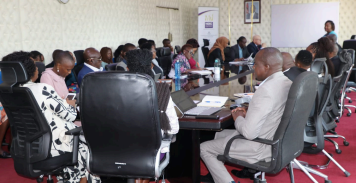
The National Gender and Equality Commission (NGEC) has convened a two-day training programme facilitated by the Department of Justice aimed at strengthening institutional capacity on human rights frameworks and reporting procedures. The training brought together approximately 60 staff members from various departments to enhance technical skills, deepen understanding of regional reporting obligations, and improve coordination in line with the African Charter on Human and Peoples’ Rights.
The training programme concentrated on strengthening understanding of Kenya’s obligations under regional and continental human rights instruments, with particular reference to the African Charter on Human and Peoples’ Rights.
Participants were taken through key reporting procedures, compliance requirements, and institutional responsibilities associated with human rights monitoring and documentation.
The sessions also focused on improving accuracy, consistency, and coordination in the preparation of reports submitted under regional accountability frameworks. Officials noted that effective reporting is a critical component of human rights protection systems, as it enables states to track progress, identify gaps, and implement corrective measures.
The engagement brought together approximately 60 staff drawn from different departments within the Commission, reflecting an internal effort to build a coordinated and technically equipped workforce. The training aimed to enhance staff competence in interpreting human rights frameworks and applying reporting standards in line with regional and international obligations.
Participants were also exposed to practical approaches for collecting, analysing, and consolidating human rights data across different thematic areas.
This capacity-building initiative is part of ongoing institutional efforts to ensure that the Commission is well equipped to fulfil its monitoring and reporting mandate.
A key focus of the training was strengthening coordination mechanisms within the Commission to support efficient human rights monitoring and reporting.
Discussions highlighted the importance of interdepartmental collaboration in ensuring that data collection, analysis, and reporting processes are streamlined and consistent.
Improved coordination was identified as essential for producing comprehensive and timely reports that accurately reflect the human rights situation in the country.
The engagement also emphasised the need for clear communication channels and standardized procedures to support institutional efficiency.
The training was anchored in the African Charter on Human and Peoples’ Rights, which provides a regional framework for the protection and promotion of human rights across African Union member states.
Participants were guided on Kenya’s obligations under the Charter, including reporting responsibilities and mechanisms for monitoring compliance. The two-day training programme marks a continued effort by the National Gender and Equality Commission to strengthen institutional capacity in human rights monitoring and reporting.