The National Gender and Equality Commission (NGEC) joins the global community in marking the International Day of Zero Tolerance for Female Genital Mutilation (FGM). This day, observed annually on 6th February, is a powerful reminder of our collective responsibility to protect the rights, dignity, and bodily integrity of women and girls, and to accelerate efforts towards eliminating FGM.
The 2026 theme, “Towards 2030: No end to female genital mutilation without sustained commitment and investment,” calls for unwavering engagement from governments, civil society, communities, philanthropic foundations, and the international community. It underscores the reality that progress made in ending FGM remains fragile without political leadership, strong systems, adequate financing, community action, reliable data, and platforms that amplify the voices of girls and survivors. Strengthening partnerships, scaling effective solutions, and reinforcing coordinated action are essential to safeguard gains and accelerate progress until FGM is eradicated.
As we move closer to the 2030 Sustainable Development Goals, the fight against FGM stands at a critical stage both globally and in Kenya. FGM gravely violates the rights and well-being of girls and women, with an estimated 230 million survivors worldwide and around 4 million girls affected annually. These figures highlight the scale of the challenge and the urgency of sustained action.
Kenya has made notable progress in reducing FGM over the past two decades. However, new challenges have emerged, including the medicalisation of the practice, cutting of younger girls and even infants, and the use of secret or cross-border methods to evade detection. These shifts demand sustained effort, long-term investment, and strong community-led initiatives to protect the gains achieved. Without well-resourced responses, such evolving practices threaten national elimination efforts.
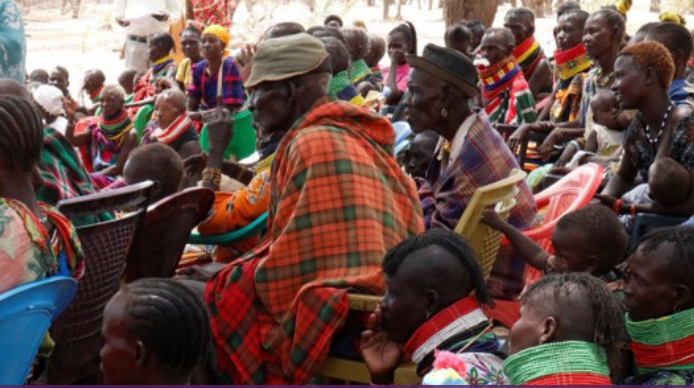
Despite robust legal frameworks, FGM persists in certain communities, often carried out in secrecy or disguised as cultural rites of passage. Survivors endure lifelong consequences, severe bleeding, infections, complications during childbirth, and psychological trauma. Beyond health, FGM entrenches inequality by denying girls access to education, economic opportunities, and full participation in society. It remains a grave human rights violation, infringing on the principles of equality, non-discrimination, and freedom from violence, while reinforcing harmful social norms and economic vulnerability.
As the government works towards its national commitment to eliminate FGM by 2030, current efforts must be scaled up and sustained. This requires predictable financing for prevention programs, survivor-centred services, community accountability mechanisms, and full enforcement of the Prohibition of Female Genital Mutilation Act.
On this International Day, NGEC emphasises that eliminating FGM demands collective action. We therefore call upon:
- Government agencies are to strengthen the enforcement of laws and policies that criminalise FGM.
- National and county governments to prioritise anti-FGM programming within development planning and budgeting.
- Civil society and faith-based organizations to amplify awareness campaigns and provide safe spaces for survivors.
- Communities to challenge harmful norms and promote alternative rites of passage.
- Investors and partners to increase funding for education and health services to empower girls and support survivors.
- Families, leaders, and citizens should uphold the rights of every child.
- Men, boys, traditional leaders, faith actors, and youth are to serve as agents of social norm transformation.
The Commission reaffirms its mandate and commitment to advancing zero tolerance for FGM, and shall continue to monitor national progress, track compliance with international and regional human rights obligations, promote access to justice for survivors, and provide oversight on policies and programs aimed at eliminating harmful practices.
Together, let us accelerate efforts to end FGM once and for all, and build a Kenya where every girl enjoys her right to dignity, equality, and opportunity.
REHEMA JALDESA
CHAIRPERSON-NATIONAL GENDER AND EQUALITY COMMISSION