None of the seven schools in a National Gender and Equality Commission assessment reported learners with disabilities by sex, so the system cannot see whether girls with disabilities are treated equally.
The schools also did not report learners by age or level of support need. The Commission’s report says that without such data the education system cannot plan for learners with the highest support needs or tell whether girls and boys with disabilities receive equal treatment.
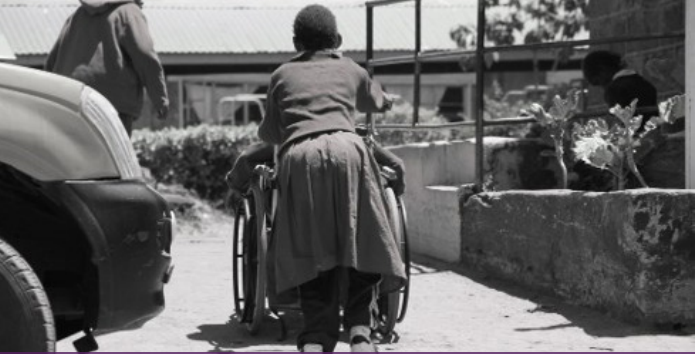
The report identifies particular risks for girls with disabilities. Accessible and private sanitation is essential for them to manage menstruation with dignity, and inaccessible washrooms and dormitories affect their privacy, safety and dignity. Boarding schools, it says, need safeguarding arrangements that take disability into account.
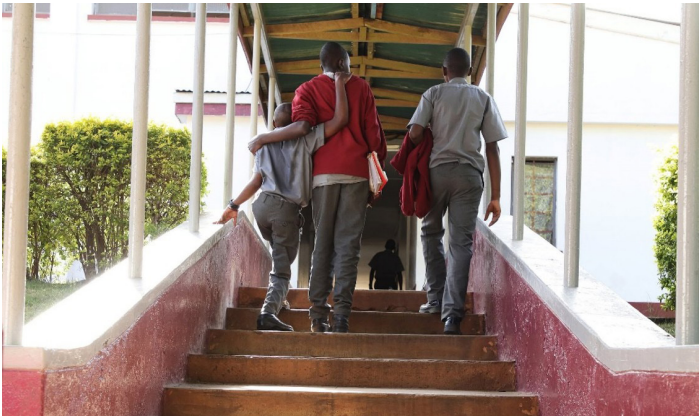
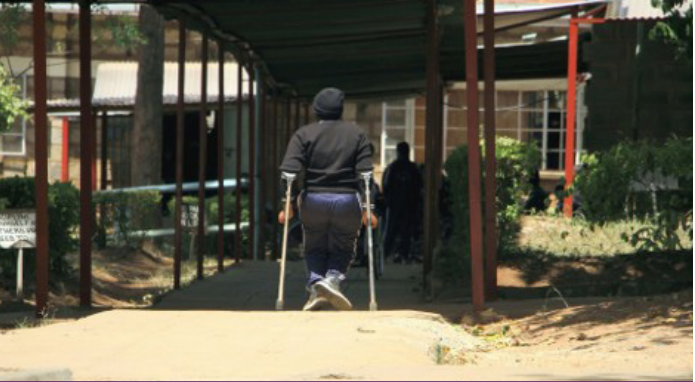
The physical findings bear on these risks. Most of the five mainstream schools lacked accessible washrooms and dormitories. Aquinas High School had no fully accessible washrooms, and at Upper Hill Secondary School most dormitories are reached by stairs.
“Inaccessible washrooms and dormitories affect privacy, safety and dignity, and boarding environments need safeguarding arrangements that take disability into account.” NGEC, Reimagining Inclusive Education under the Competency-Based Education Framework, October 2026
A PATTERN FROM PRIMARY
The Commission’s 2025 study of public primary schools in 19 counties, drawn from arid and semi-arid areas and Nairobi’s informal settlements, found similar gaps earlier in the school cycle. Girls with disabilities made up 0.09 per cent of enrolment in the schools surveyed, against 0.62 per cent for boys, and respondents cited limited identification of learners with disabilities and a lack of screening tools.
About one in four school toilets in that study was accessible to girls with disabilities. Menstruation-related absenteeism was 15.8 per cent in counties with quate sanitation, more than double the 7.3 per cent recorded where sanitation was adequate.
The teaching workforce shows the same thin representation. The Teachers of Kenya audit, conducted with the Teachers Service Commission, found that teachers with disabilities make up 1.7 per cent of all TSC-employed teachers, against a five per cent threshold, and that women are 37.2 per cent of them. In junior schools, teachers with disabilities are 0.3 per cent.
COUNTING EVERY LEARNER KNEC’s
registration of KPSEA and KJSEA candidates already captures each learner’s gender and category of disability. The Commission recommends that the Ministry of Education track placement outcomes and the support provided to learners with disabilities, with data disaggregated by sex, age, type of disability and level of support need, subject to data protection requirements.
Section 8(m) of the National Gender and Equality Commission Act requires the Commission to audit the status of special interest groups, among them women, children and persons with disabilities.