Some Grade 10 learners with disabilities were placed in senior schools whose facilities and staff could not support them, a National Gender and Equality Commission assessment of seven public schools has found.
The rapid assessment covered two special schools and five mainstream schools in Nairobi and Kiambu Counties between 28 and 30 January 2026, weeks after the pioneer Competency-Based Education cohort of 1,130,459 learners reported to Grade 10.
It followed the Commission’s inquiry at Lenana School on 15 and 16 January, where 118 learners with diverse disabilities, many with high support needs, had been placed. The school worked with the Kenya Institute of Special Education (KISE), the Ministry of Education and parents to arrange assessments and alternative placements, but it lacked the accessible infrastructure, specialised staff and support services for so large and diverse group.
PLACEMENT AND CAPACITY
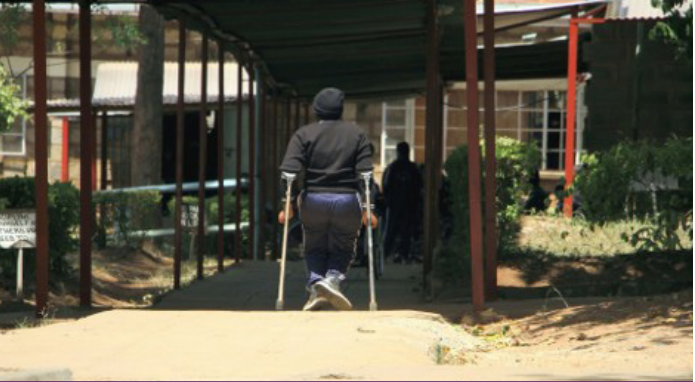
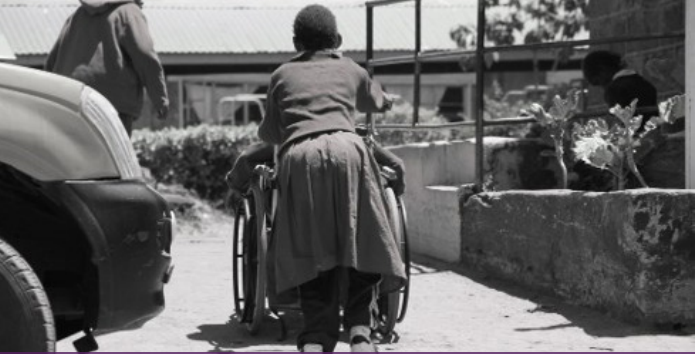
The Ministry’s placement guidelines state that no school is to be allocated learners beyond its capacity. Both special schools reported receiving more learners, including learners with high support needs, than their facilities and staff could support. Joytown Secondary School, which specialises in physical disabilities, reported overcrowded dormitories, classrooms, laboratories and dining hall.
These are not failings of individual schools. They are gaps in the system, and they can be closed.” Hon. Rehema Jaldesa, Chairperson, National Gender and Equality Commission
Disability assessment reports often did not accompany learners at admission, leaving schools to assess learners after they had arrived. Learners and parents had little say in placement decisions.
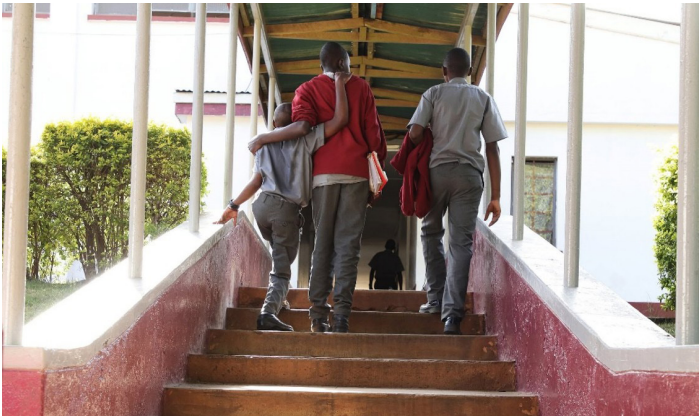
Mainstream schools were willing to admit learners with disabilities and had added ramps, adapted desks and ground-floor rooms. Most lacked accessible washrooms and dormitories, teachers trained in special needs education (SNE) and a structure for coordinating inclusion. Aquinas High School had ten learners with visual, physical and hearing disabilities, and none of its 53 teachers was trained in SNE. Only Ngara Girls High School had a disability mainstreaming committee.
WHO PAYS FOR INCLUSION
Schools relied on partners for therapy, assistive devices and learner welfare, and teachers sometimes used their own resources to support learners. Information on learners with disabilities was not consistently recorded by type of disability, support need or sex.
The Commission recommends that the Ministry of Education base placement on assessed needs, school capacity and specialisation, consult learners and parents, and provide a clear and timely way to review unsuitable placements. It calls on the Ministry and KISE to assess every learner with a disability in good time and to make sure assessment reports travel with the learner.
It further asks the Ministry to fund accessibility, assistive devices and learning materials in special and mainstream schools; the Teachers Service Commission to recruit and deploy SNE-trained teachers according to need; the Kenya Institute of Curriculum Development to supply braille, large-print and accessible digital materials on time; and Boards of Management to set up disability inclusion committees and conduct accessibility audits.
The assessment was carried out under Section 8(a) and 8(m) of the National Gender and Equality Commission Act. The report notes that its seven schools in two counties cannot be generalised to all senior schools, and that learners and parents were not interviewed directly.