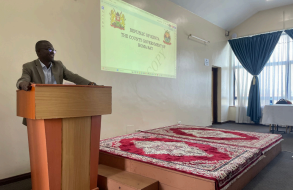
HOMA BAY, KENYA – In a brightly lit hall pulsating with anticipation, the voices of youth echoed through policy corridors once shielded from their lived realities. The date was momentous: the official validation of the Homa Bay County Youth Development Policy 2024. But the moment would be defined not by speeches or protocol, but by a firm, unapologetic declaration from the National Gender and Equality Commission (NGEC): “Youth are not passive beneficiaries. They are rights-holders, constitutionally entitled to equity, dignity, and voice.”
Despite forming the vast majority, Kenya’s youth remain systemically underrepresented in governance, public policy, and resource allocation. The Commission's message in Homa Bay was unequivocal—development for youth must be reframed as a justice driven imperative, firmly rooted in the Constitution of Kenya 2010, not as a tokenistic gesture of goodwill.
“Policies must reflect more than aspirations. They must operationalize constitutional rights,” NGEC Kisumu head Davis Okeyo affirmed. “Youth are not a demographic inconvenience—they are the cornerstone of Kenya’s present and future.”
As county governments roll out their policies in line with Vision 2030 and the Bottom-Up Economic Transformation Agenda (BETA), the words delivered in Homa Bay remain a guiding star: Kenya’s youth are not tomorrow’s leaders. They are today’s citizens, with rights enshrined—not promised—in the Constitution.